An open letter to the COAS

vk singh

Dear General,

As the head of an organization like the Indian Army, you represent many things to many people.

To the serving officers and soldiers, you are a role model. To them, you stand for excellence of the highest order.  You withstood the vagaries of operations and peacetime soldiering successfully, with elan, to reach the pinnacle of the steep pyramid. In doing so, you outshone a few thousand officers who were commissioned around the same time as you. As their Chief and leader, they hang on to your every word. They do that because of the tremendous respect that your office enjoys. They also do that because your decisions virtually control the destiny of this million strong army. Your actions and words impact them professionally and personally. Since they were always taught to lead by example, they also, by corollary, follow by example. Therefore they look at you to show them the way to achieve their ambitions and follow your path to rise to the top.

To the common citizen of our country, you are the face of Indian Army – an organization they respect to a point of reverence. You interact with the media, are reported upon extensively and appear more frequently on television than any other person serving in the organization.

To the TRP hungry, eyeballs seeking media, you are a soft target. Someone who, given an opportunity, is fair game to take pot shots at. And the opportunity seems to have been handed to them on a platter now.

The ongoing and unending controversy about your date of birth is the biggest story that is appearing in the media over the last few months. Things have come to such a pass that the issue has moved beyond being an oversight years ago affecting you as an individual to a struggle of succession within the higher echelons of the Army. All kinds of theories, speculations and rumours are doing rounds within and outside the organization.

Being someone who has been emotionally connected with the organization since birth, adorned the uniform for 24 years, and now is unaffected but still drawn to it by a sense of belonging, I feel extremely sad. I feel sad because the high office of the Chief of the Army Staff has become open to comment by every stringer with a point of view. I empathize with my former comrades at arms who would be feeling a sense of embarrassment by the spectacle of their Chief being drawn into such a media circus. I can sense their growing cynicism from seeing the open flouting of the values and morals that bind them together, by people at stratospheric level within the organization.

My limited understanding of the issue leads me to believe that this controversy can be laid to rest simply by you unequivocally accepting the ‘official’ date of birth. It is the date of birth that I believe you gave a written undertaking to accept before being considered for promotion. That, possibly, could have been the juncture at which you could have taken a principled stand. With the appointment hanging at stake, you could have asserted your true date of birth. Fighting this battle with stakes as high as that, on a matter of principle, would have truly been commendable. Unfortunately, at this juncture the same battle appears more like an attempt to stay on in office for a few more months than a principled stand.

Today it is not an individual issue at all. It is an issue of the office of the Chief of Army Staff. It is an issue of the image of the Army. It is an issue of the subsequent line of succession. Aren’t you concerned about the example being set to the entire organization? By prolonging the issue through extra procedural moves such as referring it to former Chief Justices, isn’t the Adjutant General’s branch under your command sending a very wrong message to every officer who doesn’t make the promotion board and may feel aggrieved? By polarizing the entire organization into followers of different camps headed by possible beneficiaries of the outcome of this ‘battle’, aren’t you seriously undermining the very fabric of the army? Isn’t a similar thing happening when regional bodies of veterans are canvassing for or against one of the dates of birth being accepted? What if similar regional voices start rising for the other protagonists in this game? What will that do to the nationalistic, secular characteristic of the Army?

Sir, with so much at stake, wouldn’t it be prudent to settle the matter once and for all in a manner that is becoming and in the highest traditions of this wonderful organization?

Yours sincerely,

A former soldier.

Posted in Blogitorial, COAS, Military, Ponderings, Values | Tagged , , , | 55 Comments

Of scoundrels and parliamentary democracy

neta

While many opine there is little difference between politicians and scoundrels, if patriotism is the last resort of a scoundrel, then ‘Parliamentary Democracy’ seems to be the last resort of a section of politicians today. Anna Hazare’s movement for the Lokpal Bill and Baba Ramdev’s agitation against corruption are being rued by a section of the politicians as threats to this last resort. An overwhelming mass of citizens – the raison de etre of democracy, parliamentary or otherwise – are coming out spontaneously in favour of these two movements. The common man, fed up to the gills of the unending brazen corruption by elected functionaries, sees a ray of hope in empowerment through agitation. And not content with watching the agitation on television, they are coming out and joining in. Cornered, and rudely jolted out of their complacent belief that the established system has adequate loopholes to protect them, the votaries of status quo are now scurrying for their last resort.

Let us consider the basics. Are the demands of the two movements justified? Even the staunchest of their adversaries can not dispute that they are. Are the means illegal? So far – except maybe for minor transgressions of technicalities, the means have been legal and peaceful. Are their means justified? Now that’s where the debate comes in. The right to peacefully demonstrate is enshrined in the constitution. If the established democratic system fails to solve an overwhelmingly large issue like corruption, then what other recourse is available to the people? Do they continue to be robbed blind, hoping that the thieves will use the established system to prosecute their brethren who are unfortunate enough to get exposed?

And how robust is the parliamentary democracy when it is not being ‘threatened’? A few examples. 23 Dec 2008 – 8 bills passed in 17 minutes without debate by Rajya Sabha. 14 May 2007 – 3 bills passed in 15 minutes without debate by Lok Sabha. Amazing efficiency for a parliament where the Lokpal bill has been pending for 42 years and the Women’s Reservation bill has been pending for 12 years! 11 Dec 2005 – 11 MPs cutting across party lines were exposed for accepting bribes for asking parliamentary questions. And the crowning glory – the cash for votes scandal where, irrespective of the facts of the case, all the major parties were caught on the ethical and / or legal backfoot. In the current parliament, there are 153 MPs with criminal records, 74 of them with serious charges. So while these actions by ‘insiders’ do not constitute a threat to parliamentary democracy, vociferous demands by people who elect the members to take action against corruption do. The message is loud and clear – we will continue to loot you within and outside the parliament, and don’t you dare threaten us.

Some common arguments against these agitations being mouthed by overworked spokespersons on television.  Ulterior motives. Well, what are the real motives of majority of the elected members? What can be more ulterior than looting public money? Spiritual leaders should confine themselves to spiritualism – they have no locus standi in political matters . Yes, but those with criminal charges do?

So is the sanctity of parliamentary procedures and norms really so sacred to those raising the bogey of threat to democracy? If so, why have the capitulated to the demands of allowing ‘Private Public Partnership’ in drafting of the Lokpal bill? Why didn’t they stand firm and defend their citadel against common usurpers? Isn’t their commitment to the principles of parliamentary democracy strong enough?  Or is it that they have finally seen the writing on the wall, and fear the threat to their political existence greater than the threat to parliamentary democracy? Time will tell. And then maybe it won’t.

Posted in Blogitorial, Corruption, National Issues, Politics | Tagged , , , , , | 4 Comments

JOINTMANSHIP EXPERIENCED


“I have visited nineteen countries in my career of two decades. Do you know that your Navy is interoperable with over twenty six other navies?” The dashing naval Commander from the visiting naval training squadron was not trying to impress the communications staff officer of India’s first Joint Services operational theatre Command headquarters. He was merely stating a fact to the recently posted officer to drive home the strategic nature of his service, the Indian Navy. For the next four years, the officer wished that Indian Navy were as interoperable with Indian Army and Indian Air Force as it was with the rest of the world. The conversation had occurred in July of 2004 and in December the Andaman & Nicobar Islands were struck by an unheard of earthquake intensity closely followed by a devastating tsunami now known as the Asian Tsunami of 2004. The Joint Services Command went through its first test and every problem in the hypothetical realm suddenly became real.

To its credit, the Joint Services Command rose magnificently to the occasion and reacted with speed and initiative crucial to retrieve whatever was physically feasible. Precious lives were saved as support was pushed in from the mainland from all available approaches. It was a war and the challenges were communications, coordination and logistics. It did not help that the runways were damaged, jetties were washed away, navigational aids ceased to exist and the thin telecom infrastructure washed away or submerged. Hydrographic changes made amphibious beaching risky. The magnitude of personal risk undertaken by the rescue and relief personnel cannot be assessed. It was magnificent to say the least.

This single incident brought out the absolute necessity of jointmanship ab-initio. It lent immediate focus to the goals of the nascent Command and a sense of purpose to the officers and men. It also brought out the value of common training as NDA, Sainik School, Military School, RIMC and DSSC networks helped cut military red tape to get the essentials done. It also brought out the fact that while we did get a head start for jointmanship with the establishment of Joint Services Wing, the military community failed to buildup on it till shaken by the events of OP VIJAY and introspection by the Government of the day.

Two years down the line a French naval ship, FNS Var, visited Port Blair. During the official interaction  it transpired that while they had problems of their own, the country’s top leadership had taken an early decision to have unified tri services communications architecture under the ministry of Defence. At least their Army, Navy and Air Force could talk to each other transparently. Compare this to our own situation in the heart of the capital where our Service Headquarters talk to each other and their ministry on civil telephones. They can integrate with civil networks but not with each other. There will always be an explanation but things don’t have to be this way six decades after independence.

During the colonial era, the Indian troops functioned in a joint environment during World War II. This may seem difficult to believe at first but if you decipher the familiar acronym ANPRC, you will realize the import of the statement. ANPRC stands for Army Navy Portable Radio Communications. A quick check on the internet will reveal that all significant armed forces have a joint family of communications equipment. We may have only started on that path largely due to the disconnect between the services, R&D, DPSUs and the absence of an apex level specialized structure with a political mandate and oversight to unify Defence communications. With increasing UN commitment and possibility of out-of area contingencies arising in our neighbourhood, it is essential for us to identify a single network for joint operations. Once a soldier is transported to an area of operations, do we expect him to carry separate radios to talk to supporting Navy and Air Force in addition to the Land Forces radio? We require resolving this sooner than later.

We are aware of Albert Einstein’s observation that no problem could be solved by the way which created it in the first place. I leave you for now with this interesting observation of the military thinker JCFC Fuller which we can connect with:-

There are two main causes for this military shortsightedness- the first is the worship of traditions, and the second is our incapacity to see world forces in their true relationship.”

JCFC Fuller

 [ad name=”Google Adsense”][ad name=”Google Adsense-1″][ad name=”Google Adsense”]

Posted in Higher Defence Management, Military, Uncategorized | Tagged , | Leave a comment

Gridlock

Judging by the calls I get from telemarketers, the faceless machinery behind such pesky calls has access to a lot of information about me. Most of them address me by name, and are also aware of which credit cards I hold, who I bank with, where I shop and so on. The aforementioned faceless machinery is obviously working for a profit motive, hoping to sell their products and services by making a cold call to someone less irritable than me. And the information is available to them at a price, facilitated by automation of almost all functions that come into play into my dealings with the world around me.

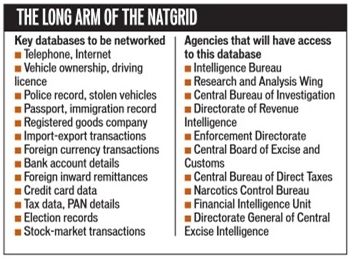
Cut to today’s news – Natgrid or National Intelligence Grid (NIG) is gridlocked in inter-ministerial turf battles. Envisaged as a centralized data bank, with data with inputs from 21 agencies and departments of government, it is meant to provide readily accessible data to law enforcement and intelligence agencies. The data is to include PAN card, voter ID card and ration card details, income tax returns, degrees obtained from schools and colleges, bank account numbers, financial transactions, travel documents, passport details, police stations and jails across the country among others. The idea is to establish metrics that will determine suspicious activities that would trigger alerts instigating closer investigations of those activities. This will, it is hoped, nip terrorist attacks in the bud.

The proposal, after 18 months of ground work and preparations, is still stuck up for want of a consensus between key ministries.  As per the newspaper reports, finance minister Pranab Mukherjee objected to the proposal of NatGrid on the grounds that it will violate the privacy law. Defence minister AK Antony reportedly expressed reservations contending that the system of Joint Intelligence Committee, where all top notch intelligence agencies share information, was working satisfactorily.

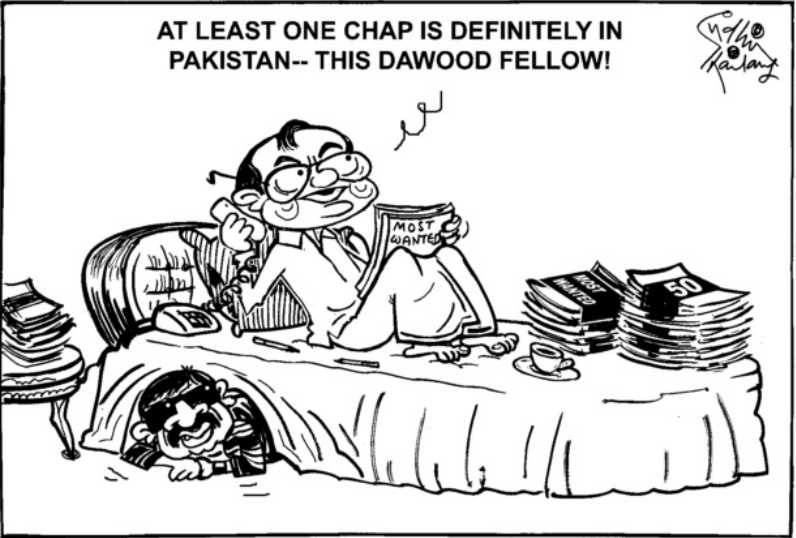
Mr Mukherjee – what privacy law? If these laws can be flouted so openly and impudently by every two bit telemarketing company, why can’t they be legally over-ridden to ensure safety of citizens from possible terror attacks? And Mr Antony, the working of the current system of information / intelligence sharing is being showcased by the repeated embarrassments on the ‘most wanted’ list issue. Something of prime national importance like a list of wanted terrorists being forwarded to Pakistan, accused of harbouring them, includes under-trials residing in the country? A round robin of blame game, finger pointing and covering substantially oversized backsides? Is that what we call functioning satisfactorily?

This is not to say that NIG is the silver bullet – that once it comes up, such lapses will be eliminated forever. Nor are the concerns of invasions of privacy unfounded. But the point is that steps which can work towards reducing the possibility of such lapses are being opposed for the very reasons that cause them – petty turf politics. Possibly it is feared that the NIG will become a prima donna amongst the plethora of intelligence agencies. Also, information which is currently both a source and currency for power play between them will become freely available – no longer a valuable commodity to be horded and bartered.

As regards privacy, the organization cannot be aborted citing fears of loss of privacy or misuse of provisions that empower it. It is the same argument that, combined with political expediency, was used to do away with TADA. If the possibility of misuse of a law, an instrument, or any system, is reason enough to avoid it altogether, then the Indian Penal Code should be scrapped tomorrow -I doubt if there is a single law in it that has not been misused. The police force should be disbanded, and phone tapping under any circumstances should be banned. While there is scope for misuse in each of these, and there are adequate instances of the same – the way out is to put watertight safeguards and accountability into place. The same should be done in the case of NIG.

The idea of setting up the NIG was mooted in the aftermath of the 26/11 Mumbai attacks, when national outrage was at an all time high, and there was demand from all quarters for adequate preventive measures against such attacks ever taking place again. Now that we are ‘attack free’ for the past 2 ½ years, complacency seems to have set in again. One only hopes it will not take another jolt of horrendous proportions to galvanize the decision makers into action.

Posted in Blogitorial, Counter Terrorism, Cyber Warfare, National Issues, Terrorism | Tagged , , , , | Leave a comment

Brand Army

hqdefault

“Capt Avinash Rathod, ek soldier ke nazar kabhi neechi nahi honi chahiye” (roughly translated – a soldier must never look down) – says the lissome model in the latest Airtel ad on TV. The ad is well made, and effectively showcases the possibilities of the 3G network in bringing people together like never before. But what it is indirectly doing is riding on one of the strongest, most recognizable, but also most under-leveraged brand in the country – the Indian Armed Forces.

That the Armed Forces are held in universal high regard in the country is indisputable. Notwithstanding the recent aberrant cases of corruption amongst some senior officers and falling recruitment figures for officers, a large section of the youth dreams of donning the uniform and doing all the wonderful things that the “Do you have it in you” ads showcase. That they don’t actually do so is more to do with the availability of greener pastures and an inclination to avoid hardships than with the unpopularity of the persona that exists around an officer and a gentleman. The image of the Armed Forces is linked to deeply rooted values such as integrity, commitment and courage. It is also viewed by people at large as a competent organization which unfailingly delivers – whether it is war, counter insurgency, or even an incident like a child trapped in a bore well. The belief – and not unfounded – is that if all else fails, its time to call in the Army.  It is thus considered a differentiator amongst preponderance of dishonesty, corruption, incompetence and lethargy that they feel afflicts systems in general within the country. Besides, visuals of servicemen and imagery connected with them evoke emotions of patriotism amongst most.

It is no wonder then that ads such as this, amongst many others ( Axis Bank – two soldiers betting on a yak at Ladakh, Pepsi – showing Shah Rukh Khan as a soldier, and of course, the many amusing Amul Butter print and hoarding ads, to name a few) effectively use images of men from the forces to motivate people to invest in their products and services. It is also why shows such as National Geographic channel’s ‘Mission Army’ are popular amongst the young and elderly alike. That Newspapers like Indian Express offer free ad space to ‘Salute the Soldier’. What all these people are successfully doing is using ‘Brand Army’ (and I use the term Army loosely for Armed Forces for sake of convenience). They are transferring the brand equity to their own products and services. By associating themselves with the image of this brand, they are subtly projecting that their values and competencies are in alignment with it.

“So –what’s the story here?” you may ask. Consider this – the Royal Navy sold its logo – the White Ensign – in 2006 to appear on products ranging from clothes to computer games, in what it said was an attempt to market its “quality brand” to potential young recruits. As per the publicity director of Royal Navy, it was a deliberate attempt to appear “trendy and cool” to a young audience. There are riders, of course. The logo is banned from appearing on liquor, tobacco, knives or violent software games. While asserting that it was not about the money, the use of the brand came at a price, and the money would be re-used on PR and recruitment campaigns.

There is definitely an idea here – a model that can be improved upon and tried out in our context. The ‘Brand Army’, which is already being used without any official consent or endorsement, can be effectively utilized in a manner that benefits the brand holder too. Use of visuals and imagery connected with the Armed Forces must be a property of the Armed Forces, to be allowed through consent, and under an agreement. The logos must be registered, and be made available for use on approved, high quality products which bear some relevance to the image of the Armed Forces. For instance, adventure gear such as hiking equipment, sports watches, aviator glasses and camping equipment. The revenue generated from the use of the brand must be accounted for and managed with adequate transparency, for which a mechanism can be created – akin to the regimental funds. The utilization of these funds can be for PR activities and welfare, or any such purpose that may be decided upon.

Thus, there would be a threefold advantage – it would prevent shoddily made commercials displaying the Armed Forces in a distorted light, it would project the Armed Forces in a manner that we would like to – for attracting better talent – and of course, it would generate additional revenue.

One can sense the resistance and disapproval that mere mention of an idea like this would bring from a large section of the uniformed community. After all, we have been brought up to abhor commercialization of any kind – it is viewed as ‘un-soldierly’. Admittedly, that was my reaction too, when I read the news about Royal Navy’s experiment some time back. But ever since, every advertisement of the kinds mentioned above that I see makes me ponder whether there is some substance in this line of thinking. And the clinching point was this Airtel ad – I am sure the toss of that pretty lady’s hair won more recruits for the Indian Army than a hundred of the ‘Do you have it in you’ ads.

(This article first appeared in Purple Beret magazine www.purpleberet.com . Re-posted with kind permission of the Editor Cdr Atul Bhardwaj)

Posted in Blogitorial, Media, Military, Shortage of officers | Tagged , , , , | 1 Comment

The Last Cavalier

0rWob

Cavalry has traditionally been associated with dash, elan, valour and romance. Whether is was ancient India, or medieval Europe – the mounted cavalryman considered himself elite. The reasons for this may have been manifold, but the most obvious ones are two. Firstly, owning and maintaining a war horse was costly to say the least. Therefore it was only people with adequate means – i.e. the aristocracy, nobility, landed gentry – ventured to join the cavalry. And secondly, the role of cavalry in battle itself – the high mobility and the added momentum that a body of cavalry brought into battle made it a decisive, battle winning factor in any engagement. Of course, eventually even if the origins of the swagger in a cavalryman’s walk were forgotten, the swagger itself became a part of the persona.

In early twentieth century technology rendered the horse redundant as a significant player in warfare. The battle tank emerged as the modern horse, and replaced the horses in cavalry units. The transition was by no means painless, and met strong resistance from the established cavalry establishment, who considered tanks being of uncertain mechanical reliability – a passing fad that could not really succeed in taking the place of a full blooded cavalry charge when it came to turning the course of a battle. But progress does not really brook much dissent in its onward journey, and horses were soon relegated to ceremonial and sporting roles in the army.

The Armoured Corps which was thus what cavalry was re-incarnated as. And the reincarnation retained much of the flavour of its predecessor, as the first generation of the convertees passed on the ethos and traditions that they had been accustomed to in the cavalry. The mobility of the arm was even more than that of cavalry, and a broader professional canvas thus helped the armoured commanders at all levels ample opportunities for developing the ability to look at the larger picture. The larger area of operations also meant a looser command and control with the commander at the spot being encouraged to take a decision rather than lose time awaiting one.

It was a combination of the legacies from the cavalier ancestors and the requirements of operational roles in the new avatar which forged the attitude of the modern day Armoured Corps. The swagger and elan remains, as does the cocky confidence. “Glamour in peace, glory in war” is the credo that typifies this philosophy.The point that most observers who mistake this preening for arrogance miss, is that it is backed by utter professionalism.  Partying hard is never at the cost of working hard – and working hard doesn’t mean not partying even harder. While the parties are visible, the professionalism is often taken for granted and even undermined. “How can a set of people who have SUCH a good time be professionally good? That they do well if because of inflated reports.”

Such perceptions have  caused a lot of harm to the arm today, and there is cause for the despondency which afflicts the bearers of the cavalry mantle today. However, on the occasion of Armour Day (celebrated on 01 May to commemorate the commencement of mechanization of Indian cavalry regiments) to them I dedicate the following few lines – a poem called ‘The Last Cavalier’ penned by Late Col Gautam Sen of my Regiment – the finest cavalryman that I have had the honour of knowing. May God bless his soul.

Cheers Sir!

I’ll not fight from trench to trench

I’ll not live from hill to hill:

I’m a cavalry soldier

Footslogger do what you will.

Pennons flying, I rule the earth

Scanning fields and sky;

Horizons are no limits to me

I move till my tanks run dry.

On the day of reckoning

I’ll be the scourge of war

Taking my scythe through battlefields

And with the fertility rites of their blood and mine

I’ll reap the harvest all battles yield.

And when I am gone,

My charred remains a motley collection on the pyre,

My dog tags sent home

Say no prayers for me.

The wind will play a dirge

As it follows the dust

To cover the earth scarred

With the blemish of my tank tracks on battlefields..

Posted in Blogitorial, Cavalry, Military, Regimental spirit, Tanks, Traditions, Values | Leave a comment

Pull of the Lanyard

lanyards

The Regimental system is one of the cornerstones of the Indian Army. Regimental spirit is the glue that binds fighting arms together in a unique bond of loyalty, camaraderie and selfless service. The spirit transcends decades, seniority and other barriers to bring all ranks of a regiment together, professionally and personally. In war and under adverse situations of all kinds, it is the thought of keeping the flag of the regiment flying high – “paltan ki izzat” – which makes men go beyond the call of duty, put their lives at peril and perform remarkable feats of valour. It is this spirit that brings aged veterans, barely able to walk, back to the unit to celebrate a ‘Battle Honour Day’ year after year.

However, like everything else, when such a spirit reaches excessive levels, it can be damaging. An example of this is an item in today’s newspaper – “Army Chief favours his regimental officers”. Apparently the Chief has played a role in facilitating all officers of his Regiment – Rajputs – preparing for the Staff College Exam, to be able to go to Infantry School, MHOW, and stay there to prepare.

On the face of it, there seems to be no big deal – no harm done. After all, there is a Rajput Battalion there, which will take care of their officers. As it is, a large number of Infantry officers do go there every year under their own arrangements to prepare for the exam, and the results generally show the wisdom of such a move. However, there’s a catch. At what rank or appointment does an officer stop being merely a regimental officer and start taking a broader perspective – taking ownership of the organization beyond regimental affiliations? After all, isn’t the Chief of Army Staff the Chief of the entire army? Shouldn’t he therefore, be equally concerned about the performance of all officers appearing for the exam? Should he really be seen going out of his way to make such arrangements for ‘his’ officers? What kind of a message does such a narrow focus send to the rest of them?

It is not without reason that the Army has a system of officers beyond the rank of a Colonel no longer wearing the regimental cap badge and shoulder titles.  They are not expected to confine their thoughts and actions to regimental level, and are supposed to identify with the Indian Army as a whole. From here on, they command formations where units of all regiments and arms are under their command. They are therefore supposed to rise above regimental loyalties and be fair and impartial in their dealings with all of them.

It is rather sad that in the recent years outright favouritism motivated by a misplaced sense of regimental loyalties has become par for the course for most senior officers. So, a number of important appointments in the key branches at Army Headquarters have been held by officers belonging to the same regiment (or arm, in the case of Artillery) as the incumbent Chief. Similar preferential treatment has been accorded when it comes to the move of units or foreign postings. A statistical analysis of the results of promotion boards and redressal of complaints against ACRs or Non-empanelment is also sure to show an unmistakably skewed pattern in favour of the flavour of the day in terms of regiment.

Unfortunately, this is a self perpetuating trend that gets accentuated as time goes along. And while the ultimate benefit to individuals or to a particular regiment may be short lived, the overall damage being caused to the organisational fabric of the army as a whole is long term. It is up to the sagacity of senior officers to differentiate between healthy regimental spirit and outright parochialism, and chose the former over the latter.

Posted in Appraisal System, Blogitorial, Military, Promotion System, Regimental spirit, Values, Welfare | Tagged , , , | 6 Comments

Double Bogey

Gallery4-The-course-is-extremely-well-maintained2

First page news again – and for the wrong reasons yet again. “Army golf clubs a bogey : CAG”  and “Army of golf clubs eat up defence land” are only some of the scathing headlines in the morning dailies today. Apparently the Army is running over 97 ‘Illegal’ golf courses across the country. Of course, to a sensation seeking public fed by an ever obliging media, it is yet another ‘scam’ in the series – from Ketchup to Adarsh. So it is all the more plausible, and the impression given is that someone somewhere is sitting on piles of money made through running illegal golf courses on defence land. Who has the time to read the details, and moreover who has the understanding to be able to read between the lines to discern between actual corruption and mere violation of norms.

The major ‘irregularities’, as one can make out from the newspaper reports, are that golf is not a ‘recognized’ or ‘authorized’ sport as far as MoD is concerned, therefore use of defence land for its pursuit is not in order. Secondly, these golf courses have been designated as ‘Environment Parks and Training Areas’ to hoodwink the system. Thirdly, that these so called training facilities are being also utilized by civilians, veterans and even foreigners in some cases. Fourthly, that private societies have been formed to run these, money is being charged for use of facilities, and the proceeds are not being deposited into government treasury as earnings arising from use of defence land. To my mind, the entire episode is not about corruption or misappropriation, but about foolhardy bluster combined with a lethargic affinity to shortcuts. The latter is often a product of the panic to do something fast enough to show results within short tenures, combined with ignorance of procedures and reluctance to try and find out about them .

Firstly, playing golf is obviously not an ‘illegal’ activity. Therefore, even if it is not a ‘recognized activity’ by the MoD, why hasn’t action have been initiated to have it so included long ago? It is not as if it requires an amendment in the constitution.  It would, however, be a laborious and complex process which would require the prudence and perseverance, farsightedness, and ability to see beyond tenures – to work towards organizational interest at something for which one may not ultimately get the credit. Also, somewhere there might be a niggling feeling of guilt – golf, after all is not a ‘troop game’. Therefore, rather than doing the harder right, the easier wrong is resorted to. If golf courses are not authorized, lets just shut our eyes tight and imagine these are environment parks instead. And assume that everyone else, the CAG, MoD and media, will play along in this make believe mumbo jumbo.

Such tendency, to my mind, arises from the military virtue of unquestioning obedience, of finding a way or making a way to ensure whatever the commander ‘desires’ happens – no matter what – combined with the usual military preference for action and disdain for bureaucratic procedure hampering such action. Remember the golf carts purchased ostensibly to transport patients in hospitals, or as recce vehicles? So if the desire is to establish a golf course, we ‘make a way’ by such shenanigans as pretending they are something else, to make sure the orders can be implemented. Not only is the alternative of processing a combined case to get an approval once and for all more cumbersome, it would also result in the setting up of such a golf course long after the tenure of the person who undertakes such a task. Yet another military belief – that it is ‘OK’ to bend rules for the ‘larger good’ and as long as such bending does not result in any direct personal gain. Unfortunately, we are no longer living in the era of the insulated isolated cantonment where ‘CO Sahib ka hukum’ could override anything else. We are living under constant scrutiny from various quarters, with the slightest transgression of any kind being highlighted. And of course, in the public eye there are no distinctions between a transgression undertaken for lining someone’s pockets, or such transgressions as renaming something in order to circumvent regulations, even though the latter is undertaken for the collective benefit.

A point which has not been mentioned in the newspaper reports, and possibly in the CAG report too, is that the land being used for golf courses is not earmarked for any other use. Of course, the CAG or the MoD couldn’t care less that if the land is left unutilized. Used as golf courses, not only is such land maintained and gainfully utilized, it is also protected from encroachment. However, unless the laid down procedures are followed, such utilization is unauthorized, and open to scrutiny. And of course, the connected financial transactions also assume an illegality that needs regularization.

It is therefore, about time that such anomalies are rectified and the existing facilities regularized. One  hopes that is what will be the course (no pun intended) adopted – and not a knee jerk reaction of closing down the facilities or resorting to further futile smoke and mirror tricks to perpetuate them under other guises.

Posted in Blogitorial, Military | Tagged , , , | 1 Comment

Deja Vu

“Why is the military so bad at retaining these people? It’s convenient to believe that top officers simply have more lucrative opportunities in the private sector, and that their departures are inevitable. But the reason overwhelmingly cited by veterans and active-duty officers alike is that the military personnel system—every aspect of it—is nearly blind to merit. Performance evaluations emphasize a zero-defect mentality, meaning that risk-avoidance trickles down the chain of command. Promotions can be anticipated almost to the day— regardless of an officer’s competence—so that there is essentially no difference in rank among officers the same age, even after 15 years of service. Job assignments are managed by a faceless, centralized bureaucracy that keeps everyone guessing where they might be shipped next.”

Going through an article sent to me by a coursemate (thanks Manuhar!) a couple of days back, I was particularly struck by the preceding paragraph. No, it’s not about the Indian Army, though one can be forgiven for making that mistaken assumption – the article refers to the US Army. And that is what struck me – the fact that we face identical issues despite the vast differences in our society, economy, systems and organizations. The article by Tim Kane in the Atlantic Magazine, with minor changes in the terminologies, could actually have been written about the Indian Army. The other thought that hit me was that many issues that the author talks about are not necessary restricted to present times or circumstances. Those who have read Norman Dixon’s classic ‘On the Psychology of Military Incompetence’ would bear me out that all the issues mentioned about the US Army, and sounding familiar about our own, have been faced by others earlier down centuries – for similar underlying reasons, both external and internal. Let me quote directly from the book –

“When a military spirit forsakes a people, the profession of arms immediately ceases to be held in honour, and military men fall to the lowest level of public servants; they are little esteemed and no longer understood… Hence arises a circle of cause and consequence from which it is difficult to escape – the best part of the nation shuns the military profession because that profession is not honoured, and the profession is not honoured because the best part of the nation has ceased to follow it. “

Since the book was written a while back, I guess this is a timeless phenomenon. The nation rallies behind its army at times of crisis, making much of them. We see this in all major wars fought within sniffing distance of its population centers. But in distant crises where their daily lives are not affected, the citizenry is happy allowing the soldiers to carry on doing whatever it is that soldiers do. Thus, when the armies are fighting far away from home – overseas, as in the case of America, or away from the focus of mainstream life as in the case of Counter Insurgency operations in far flung parts of India – they feel ignored and unappreciated. And it’s a fact of life that soldiers get along without the best of salaries but can’t reconcile to lack of appreciation from the very people whose battles they are fighting. Acts of extraordinary courage and heroism don’t even get noticed. To add insult to injury, even minor transgressions by them are promptly lapped up and highlighted by the media before receptive audiences of those very people.

Speaking of the internal issues next – the faceless bureaucracy controlling careers being blind to merit would find echo with me, but then I would not be a impartial commentator on this. Since armed forces are essentially non productive organizations, there are no ‘bottomlines’ to measure one’s output or efficiency. So how does the system ensure ‘meritocracy’ in the absence of tangible results when there are no hills to capture or enemies to slay? Add to that the extreme steepness of the pyramid, and we have the recipe for a HR nightmare. So why does anyone wonder when capable people leave?

The qualities (or skill sets as I have now learnt to call them in the corporate training environment) required of a good junior leader are vastly different from those required of a general in peacetime soldiering. Particularly in a democratic setup like ours and the US (Pakistan does not have the problem outlined in the article under question. In fact, there the Civil Services face this!) A good junior leader needs to take risks and innovate rather than being tied down by confines of rigid conventionality. But as you rise up the ranks, conformity and risk aversion become virtues. Good junior leaders therefore have to change their ways, or remain junior. Alternatively, as mentioned in the article, they step out and find their victories elsewhere. But paradoxically, in war the situation changes and the same qualities of risk taking and innovation are required even up the chain of command. The peacetime generals often find themselves in a cleft stick when faced with this, and very often fail to deliver in times of crisis. Norman Dixon’s book is full of examples of this. Thus we see in both the World Wars, most of the senior leadership in service at the outbreak was soon removed for one reason or the other, and people were rapidly promoted in their place. Field Marshal Slim, for example, was only a substantive Colonel even at the end of II WW.

Attrition of capable people is a huge challenge being faced by the corporate sector too. But the difference is that in business, such attrition affects bottomlines. Therefore they take active steps to prevent it, often going great lengths to do so. In the case of armed forces, since the impact is more intangible, and may become apparent only at times of extreme crisis, very little is done beyond lip service and knee jerk cosmetic changes. This is not a one off phenomenon, and hence the timelessness of the article and Norman Dixon’s work.

Posted in Blogitorial, Management, Military, Shortage of officers | Tagged , , , , , | 4 Comments

The Canteen Brouhaha

2015_3$largeimg13_Mar_2015_230507783

The Comptroller and Auditor General recently carried out the ‘Performance Audits’ of Canteen Stores Department and of the Supply Chain Management of Ration Supplies in the Army. Incidentally, these are two separate audits, and DO NOT relate to “Irregularity in Supply of rations through CSD” as most of the newspapers are erroneously reporting. The audit reports in question have been in news because they have led to the summoning of the Service Chiefs by the Parliamentary Accounts Committee – something unprecedented, as per the same news reports. The newspapers are very sketchy about the actual findings / recommendations of the reports – those interested in reading more about them can access them HERE (Rations) and HERE (CSD) .

While the aspect of irregularities in supply of rations brooks no argument – it is a deep rooted malaise that needs to be addressed in detail. However, the other aspect relating to CSD canteens is not really one of irregularities. It relates to the fact that the Unit Run Canteens (URCs) are beyond the purview of the CAG to audit – and the CAG has serious objections to that. The Canteen Stores Department is a part of the government, under the Ministry of Defence. It is paid for out of the Consolidated Fund of India (CFI) and is therefore auditable by the CAG. Incidentally, the Canteen Stores Department itself used to function as a Public Limited Company till 1977, when it became a department of the Government of India. The URCs, however, are Regimental Institutes. They are NOT supposed to be paid for out of the CFI, but are ‘privately funded’ through Regimental Funds. The earnings arising out of the URCs are also therefore beyond the purview of the CAG.

This is the arrangement that has always existed, and it works quite well. There is a system of internal audits of the URC accounts, including quarterly audit boards and inspection of accounts during the annual administrative inspections. The SOPs for the distribution of profits to various Regimental Institutes and their subsequent utilization are also laid down comprehensively. While it would be immature to assert that there are never any frauds or discrepancies – but such instances would not be any more than those that take place in any other system that is audited by the CAG. In fact, these would actually be far lesser than some of the frauds being perpetuated to appropriate public funds across the country.

The CAG’s contention, however, seems to be that how can something as big as this not be under its jurisdiction. The CAG’s recommendations with this regard are “The URCs should be recognized as the retail outlets integral to CSD. The operational results of the URCs should be disclosed in the proforma accounts of CSD to provide a true and fair view of the complete operations of the organisation. Ministry of Defence should also take immediate steps to bring the URCs under the accountability regime that is applicable to all operations funded by the Consolidated Fund of India.”

The reasons cited for the above recommendations are:-

  • URCs operate from government land / buildings, are manned by service personnel and use government transport to move goods.
  • They are supervised by the unit Commanding Officer.
  • Although they are the retail outlets and the face of the CSD, they are not accountable to CSD.
  • URCs are subsidized through soft loans and temporary credit facility from CSD. They also receive Qualitative Discounts (shares of profits) from CSD. Since CSD itself is a government organization, these subsidies / discounts amount to the URCs being supported by the CFI.
  • And the last point, which really is an amazing reason for bringing URCs under the scanner of the CAG, is that in the absence of this, the performance of the CSD cannot be fully assessed by the Performance Audit of the CAG.

By this logic, every government servant who is living in government accommodation, using government transport to commute and is availing subsidized education for his children by sending them to a government funded school, should be liable to have his personal accounts audited by the CAG – so that the CAG can assess the performance of the government as a whole.

The whole episode highlights some disparate but very pertinent and interesting issues.

  • The extreme shallowness of media reporting, including some very respectable names like NDTV, whose website talks about “Irregularities in the Canteen Stores Department” with regards to “existing procedure for provisions of dry rations” and Times Now which had a ticker running all afternoon that talked about the chiefs appearing before the PAC in connection with the “CSD Scam”.
  • The beating that the image of the Army / Armed Forces has taken, that such issues are so readily believed to be / accepted as scams.
  • The result of this downfall in the image has also left internal regimental institutions open to questioning and liable to come under supervision, since the implicit belief in the probity of people handling them no longer exists.

One is not immediately aware of the outcome of the interactions of the Service Chiefs with the PAC, and whether as a result the CAG will have its way and bring the URCs under its purview. It will be yet another blow to the splendid organizational structure of the Armed Forces, and for all the wrong reasons. It would give a handle to the Local Audit Officer to extract yet another pound of flesh from units in return for settling the various audit objections arising because of the lack of knowledge / carelessness of the people handling the accounts in units. It wouldn’t be surprising if that happens, but will certainly be sad.

Posted in Blogitorial, Civil Military Relations, CSD, Military, Welfare | Tagged , , , , , , | 8 Comments