
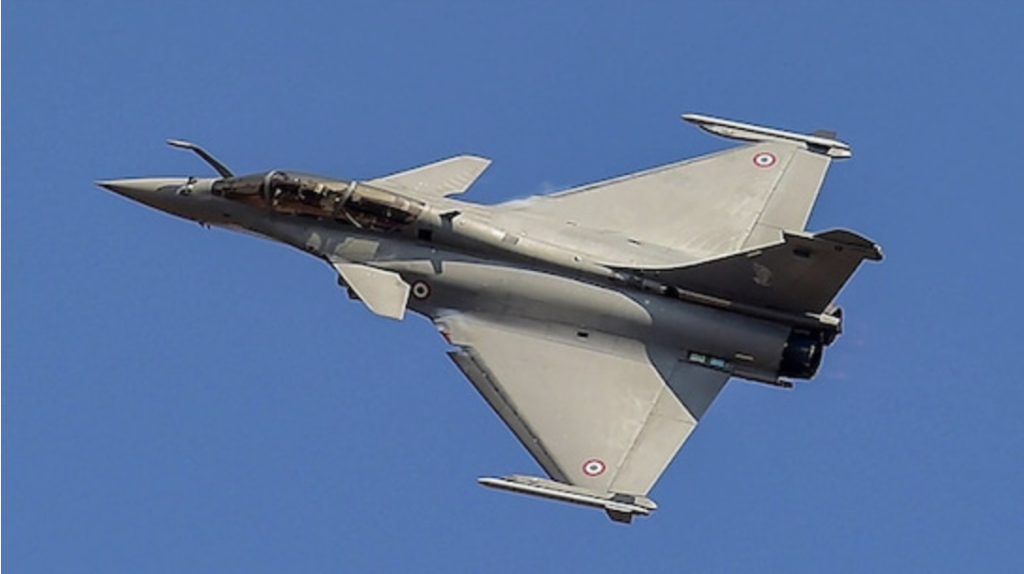
During the ongoing Operation Sindoor, there’s been much noise—claims and counterclaims—about Pakistani assertions of having shot down several Indian fighter jets. This isn’t unusual. In conflicts between long-time adversaries like India and Pakistan, truth often becomes the first casualty—sacrificed at the altar of domestic political compulsions.
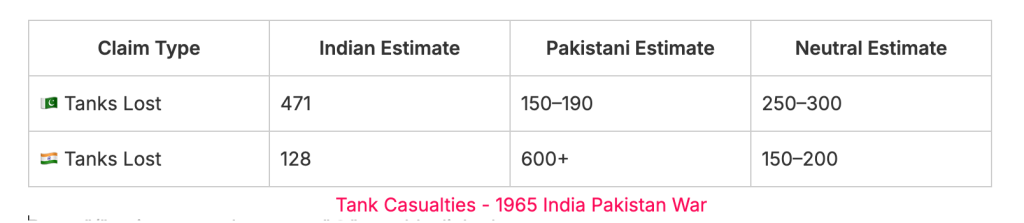
A good example is the 1965 war. Pakistan claimed it destroyed over 600 Indian tanks, losing only around 150–190 of its own. India, on the other hand, estimated 471 Pakistani tanks lost, including 97 captured in working condition. Neutral military historians tend to agree more with India’s numbers, which were also supported by physical evidence—like the captured tanks at Patton Nagar.
Now, in 2025, Pakistan claims to have shot down more than five Indian jets. India has chosen not to issue a direct rebuttal. The Director General of Air Operations (DGAO) merely stated that “all our pilots have returned safely”—a remark open to interpretation. Does it mean no jets were hit, or just that pilots bailed out safely?
Notably, Pakistan hasn’t offered any credible proof—no wreckage, no video, no radar visuals. Despite this, some voices in India, including the Leader of the Opposition, are demanding that the government “own up” if there were any losses. This is not just politically naïve; it borders on irresponsibility. In an environment where information warfare is as critical as battlefield strategy, such demands play straight into the adversary’s hands.
The government’s silence may well be strategic. In modern warfare, ambiguity can be a weapon too.
Let’s consider two scenarios:
1. If India did lose aircraft
Why hide it? Losses are unfortunate but expected in military operations. In India’s democratic setup—with social media, smartphones, and satellite imagery—it’s nearly impossible to hide wreckage or damage for long. If concealment was attempted and later exposed, the backlash would outweigh any short-term gains.
2. If India didn’t lose aircraft
Then why not deny the claims outright? Why not show the jets on the tarmac to a group of journalists?
One possibility is that India used decoys or deception to mislead Pakistan, allowing it to believe it scored hits on real assets. If that’s the case, letting the ambiguity linger is smart strategy. It sows doubt in the adversary’s mind and could prove useful in future encounters.
In either case, decisions on what to reveal—or conceal—are likely taken based on military and intelligence assessments, not political calculations. If anything, the government stands to lose more politically by appearing evasive.
Those demanding public disclosures on sensitive operational matters should remember: national security isn’t a press conference. It’s a long game, often played in the shadows. And in that game, a little silence can be louder than a thousand soundbites.
Well said Rohit. The need is of statesmanship and not brownie scoring.
Dear Rohit,
Very well balanced views strategically..
The Leader of the Opposition should get educated and behave maturely in the National Interest..
Colonel BP Sharma 👍