No Man Left Behind

Disaster struck an Indian Army post at 19,350 feet on the icy heights of the Siachen glacier on 3rd February 2016 in the form of an avalanche, burying the ten soldiers manning it under 35 feet of snow. The nation took but a few hours to assume the worst, and social media was abuzz offering homage to the ten ‘dead’ martyrs. This included the Prime Minister and Congress Vice President Rahul Gandhi, both of who tweeted their condolences. Yet there was a band of brave warriors from the Madras battalion the trapped soldiers belonged to who doggedly refused to give up. The weather continued to be bad, with blizzards adding to the already inhospitable environment. Postponing the search operation till the weather improved didn’t even occur to them. They would gladly risk their own life and limbs to seize even the slimmest of chance of any of their comrades out there being alive.

A rescue team of 150 men and two rescue dogs toiled tirelessly under the most difficult working conditions imaginable – minus thirty degrees temperature, with frequent bouts of blizzards reducing visibility to near zero. Yet the men persisted, goaded on by hope based on faint radar signals indicating at least one soldier was still alive under the snow. In an environment where cold makes it impossible to operate even the simplest of equipment like a camera, they wielded motorized ice axes to cut through 30 feet of blue ice, which is harder than concrete. Unmindful of the biting cold, impervious to fear of frostbite on their exposed hands operating the machinery, they struggled on. Their painstaking efforts were rewarded on the sixth day, when Lance Naik Hanamanthappa was found – in extremely critical condition, but still alive. The bodies of the rest of the soldiers were also recovered and retrieved.

The dogged determination exhibited by the men and officers of this battalion exemplifies an unwritten but equally inviolable code of Indian Army – No man left behind. Dead or alive, the thought of abandoning a comrade at the mercy of an adversary – be it the enemy or nature – is an anathema. The list of bravehearts who have received gallantry awards for daring acts to rescue their fallen or trapped comrades is long – the latest amongst them Lance Naik Mohan Nath Goswami who was awarded the Ashok Chakra, country’s highest peace time gallantry award on the Republic day just gone by for laying down his life while saving those of two of his wounded comrades.
This, and similar honour codes, may be difficult for an outsider to appreciate in their fullness, but are the basis of what makes our army one of the finest fighting forces in the world. To say that every man who joins the forces does so out of an exceptional sense of patriotism would be not be correct. As also to attribute a soldier’s undying love for country the sheer motivation for risking and sacrificing his life. Irrespective of the reasons for which he has joined up, on becoming the part of an organisation like a battalion or regiment, his life starts being dictated by these honour codes. The unit becomes his second family, one in which he spends nine months of the year as compared to three months with his own family back home. Shared sorrows and joys, and more importantly, dangers and hardships faced together, forge an undying bond between them.

This bond, and the implicit trust in each other, is what turns ordinary men from diverse backgrounds into a cohesive fighting team. It propels them to face enemy bullets without ever considering backing down and letting his comrades down. The assurance that the others wouldn’t hesitate to risk their own lives for him makes him put his own life on the line for them. He knows that, dead or alive, his comrades will never leave him behind.
By living up to this honour code, the sterling battalion has lived up to the finest traditions of the army, and deserves to be feted.

Posted in Military | Tagged , , , , , , , | Comments Off on No Man Left Behind

Flexibility in Execution

increase_it_flexibility_by_leasing_it_assets

Military strategists from times immemorial have agreed on decision making as a key attribute of leadership. Good decisions make good leaders, and vice versa. The Prussian military theorist Von Clausewitz considered three ingredients of sound decision making by a leader or commander -information, intuition and genius. While the first is external, the second and third are innate to the decision maker. When we juxtapose this on the frictions of war, the ‘noise’ (both literal and figurative) affects the quality and veracity of information. Also, the necessity of speed in decision making implies a much greater reliance on the intuition and genius of the leader.

Time is a luxury that may (or may not) be available at the stage of strategic planning. Yet, at this stage, the information or intelligence available may be of less than desired quality. Once the leader has evolved the plan and is committed to it, a ‘conformity bias’ sets in. The architects of the plan get wedded to it, and there is a marked reluctance to stray from it. Herein comes the pitfall in execution. As events unfold in the course of operationalization of the plan, more information becomes available. Also, situations emerge rapidly, circumstances change constantly. A good leader, at this stage, should be monitoring the informational and situational developments, and carry out necessary calibrations to the plan itself. The ability to do so effectively is what actually separates a leader from others. An indifferent leader tends to evaluate new information based on whether it confirms to the plan or not, and tends to reject any new piece of information that doesn’t.

Amongst the principles of war propounded by Clausewitz, ‘Selection and Maintenance of Aim’ is primary. A common mistake made is to confuse the ‘plan’ with the ‘aim’, resulting in a reluctance to tamper with the plan for fear of deviating from the aim. A good leader understands that the plan is merely one of the means of reaching the aim, and a tentative one at that. With his eyes fixed on achieving the aim, he is not reluctant to change the path towards it if the situation so dictates. Herein lies the importance of another of the principles of war that is seen as a poor cousin to others – ‘Flexibility’.

Selection and maintenance of aim should therefore always be considered in conjunction with flexibility. Failure to do so has often been the cause of downfall of many a brilliant plan at the execution stage.

Examples abound of battles lost due to reluctance in making mid course corrections. As do instances in the business world. The displacement of Nokia as the undisputed leader of the mobile industry is one such story. Faced with growing competition from Apple’s iOS based iPhone and Android based phones of other competitors, Nokia’s market leadership could have been safeguarded had it recognized the need to change its operating system to stave off the challenge. Instead, it continued along its path of hardware improvements, leading to its eventual takeover by the software giant Microsoft.

The ancient Chinese military genius Sun Tzu compared the execution of plans to the flow of water.

“Military tactics are like unto water, for water in its natural course runs away from high places and hastens downwards. So in war, the way is to avoid what is strong and to strike at what is weak. Water shapes its course according to the nature of the ground over which it flows; the soldier works out his victory in relation to the foe whom he is facing. Therefore, just as water retains no constant shape, so in warfare there are no constant conditions. He who can modify his tactics in relation to his opponent and thereby succeed in winning, may be called a heaven-born captain.”

These words, written thousands of years ago, hold true today, not only for execution of military operations, but for taking any strategy to its fruition.

Posted in Management | Comments Off on Flexibility in Execution

Danda Democracy

Clipboard

I always regret not having studied Political Science, having been schooled in a day and age when it was sacrilege to even think of anything except PCM (Physics Chemistry Math) if you were a boy and PCB (Physics Chemistry Biology) if you were a girl. So my knowledge of what comprises a Democracy is very basic, gleaned from the little Civics studied up to tenth grade. Subsequent attempts to expand that knowledge by reading Fukuyama met with limited success. My understanding of how a democracy works is very rudimentary. People subscribing to a certain ideology come together to form a political party. These political parties set forth their intentions and agenda before the people during election campaign. People cast their vote for the party whose ideas resonate with their own aspirations for the future. The party which secures a majority forms the government and takes decisions on behalf of the people. The direction in which it makes policies, legislates and conducts foreign affairs etc are based on the known leanings and principles of the ruling political party. These are assumed to be in line with the will of the people since the majority that elected them expected them to act in this manner.

What if the government doesn’t act in the way that the people who elected them expected them to? There are certain checks and balances built into the syste to prevent an elected government from causing unalterable damage to the country during its tenure of five years. For example, to change the fundamental nature of the country’s values or principles envisaged by the founding fathers, it needs to amend the constitution. This requires a three-fourth majority in the parliament. If the ruling party has this majority on its own, it implies that its vision is backed by adequate number of citizens and thus it is in a position to make the requisite changes on its own. Otherwise, it needs to build consensus with the opposition, thereby getting the buy-in of the people who voted for the opposition too. Apart from this, any action by the government deemed illegal or unconstitutional can be challenged in court by the opposition or even an ordinary citizen. The government is also accountable to the parliament for even its day to day functioning, and various parliamentary committees are formed to monitor this, which include members from all political parties.

Within the confines of the above safeguards, the government carries out the business of governance for its elected tenure. At the end of that tenure, people assess its performance vis à vis its promises, and if it has failed to live up to their expectations, may punish it by voting it out of power. It is thus a five year contract, where the people outsource the task of taking decisions, within the confines of legality and constitutionality, to the government. The reward for performance is renewal of the contract, and vice versa.

But lately one is puzzled to see a different interpretation of democracy as it is manifesting in the conduct of some political parties. A national party without even the ten percent seats in the parliament necessary to confer upon it the status of an official opposition takes a conscious decision to disrupt the parliament and not allowing the government to function, in order to ‘safeguard the interests of the people’. Another regional party, facing a massive exodus of its sympathizers towards the ruling national party, takes it upon itself to use criminally coercive means to enforce its will on ideological issues.

Is it stupidity, arrogance, or a healthy dose of both that deludes them into abrogating the role of sole arbitrator and enforcer of the will of the people, in the face of electoral evidence to the contrary? By doing so, aren’t these parties actually insulting the majority who elected the government?

Let us, for the sake of argument, accept that the government’s actions are contrary to the mandate of the people. That the government has grossly deviated from the policies and promises that the people had elected them for. The opposition must take recourse of the court if any of these actions by the government are illegal, such as corruption, or unconstitutional. If not, and the differences are on aspects of ideology or priorities, then the democratic thing to do would be to let the government function the way it deems fit. As an opposition, it is your duty of course to constantly point out the follies in the government’s decisions and actions, and bring them to the notice of the people. They, the voters, are the ultimate arbitrators, the masters which all political parties claim to work for. If the government’s policies are as flawed as asserted by the opposition, the people will punish them in the next elections. But ideological differences, or the belief that your own understanding of what is good for the country or what the people want, doesn’t give opposition the right to disrupt the functioning of the government. Similarly, it doesn’t give any party, group or organization the right to force their agendas through coercive tactics such as disruption of events, mob lynchings or even assassinations.

The message that such parties are sending is that an electoral mandate is of no consequence. That neither the people in power nor the majority which has elected them know what’s good for the country and for them. That they, the opposition which has been booted out of power, is the sole arbitrator of people’s well being. Interestingly, this affectation is reminiscent of the colonial attitude of yore, where the chosen few were destined to bear the ‘white man’s burden’ of enlightening the savages. They had to do this by force if necessary, for the savages themselves didn’t know what was good for them.

As someone who voted the current government into power, I resent this. I want the government I elected to be given opportunity to work towards fulfilling their promises. If they fail to meet my expectations after five years, and if I have a better alternative available at that time, I will withdraw my vote from them. Till then, I don’t want the opposition or even some coalition partners, to sabotage my will being exercised through the government I have elected.

Posted in Politics | Tagged , , , , , , , | Leave a comment

Penny foolish pound foolish …

9cfa0e18-5f1b-11e4-98b6-aff0797ad804_syd-5lllt6s44pwdbcku8yd--646x363

I would like to meet the babu who came up with the apparently brilliant idea of excluding the Pre-Mature Retirees (PMR) from the ambit of OROP – I’m told he’s one of the smarties from PMO. On the face of it, he must have really impressed his political masters. After all, in one stroke the assessed burden of granting OROP has been reduced to less than half. And, since the affected people have chosen to leave the service voluntarily before their superannuation, they can’t complain if they don’t get the same terms as those who serve full time. And this had the potential to cause fissures amongst the veteran community, weakening the movement which has assumed ominous proportions for the government.

Beaming with pride, he must have gone and explained his flash of inspiration to his political masters. In 10 slides, no more, the saving that this would make. With their limited time and even more limited understanding, the political bosses must have leaped at this idea. And so it happened again – the babus managed to make asses out of everyone. In this case it must have been a solace to their wounded egos, ensuring that the victory of the OROP movement was pyrrhic.

What the political masters failed to understand that this doesn’t make sense at many different levels. Forget about the moral / legal argument – that in any case will get settled once the matter is pursued vigorously in court. Let’s just look at the political and financial effect. Politically, as far as the BJP government is concerned, by this simple exclusion, they have allowed Rs 10 Lakh Crore worth of political goodwill to go down the drain. The number of people who are dissatisfied and angry from the outcome far outweigh those (if any) who are happy.

But I’m amazed that not one amongst the intelligent decision makers have realized the obvious long term financial impact of this. To put it very simply, if this decision is enforced, it will strongly dis-incentivise officers from seeking PMR. Presently, a lot of officers who get left out along the way up the steep pyramid of career progression in the forces leave the service after completing 20 years, which entitles them to a pension.

So we have Lt Col Nattha Singh, who unfortunately did not make it to the next rank, and is drawing Rs X as his salary at 20 years. If he chooses to take PMR now, he gets a pension @ Rs .5X. But now, since he doesn’t want to lose out of the OROP scheme, he decides to continue to serve. Since he is 40 years of age as of now, he serves for the next 14 years. So now he continues to draw Rs X plus his yearly increments and allowances, accommodation etc which he would not have got he taken PMR. By the time he reaches superannuation age, he has seen at least one pay commission, and his salary is somewhere in the range of 2.5X – 3X. He now takes pension, WITH OROP, on 1.25X – 1.5X instead of on .5X as he would have if he had taken PMR. In these 14 years, there is neither a motivation nor a compulsion for him to actually work. He can’t be promoted, nor compensated extra in any monetary form if he works hard. On the other hand, as long as he doesn’t break any rules, he can’t be penalized in any way for not working.

Now if I am in Nattha Singh’s place, I would spend 14 years playing golf and holidaying at the government’s expense and then walk away with much more money, and OROP to boot, at the end of it.

Posted in Military | Tagged , , , | 1 Comment

Me Too

image
There is a reason why our country, like others, maintains Para Military Forces (PMF) in addition to a standing army. The rationale is to have a lower cost force not required to be manned, trained and equipped with the same exacting standards as the armed forces, primarily for peace time border protection and internal security duties. Hence their entry standards for recruitment are not as stringent as the armed forces. The necessity of keeping such forces at a young age profile also doesn’t exist, unlike the army. Thus their troops retire at the ripe old age of 60 like any other government service, except the armed forces where they retire between 35 to 45 years of age.

The difference in quality / performance between PMF and the army is evident from the fact that the army is regularly called out to handle internal security situations and natural calamities- tasks that it would not be required to do if the PMF were more effective in dealing with them on their own. Insurgencies in the NE and Kashmir have been dealt with by deploying the army. The army would have also been deployed in Naxal affected areas if there hadn’t been such strong resistance from successive chiefs, with good reason. As regards guarding the borders, PMF are deployed on international boundary during peacetime. The LoC, which is more active, is held by the army, and even the IB is reinforced by regular troops during active hostilities.

Having said that, this does not imply the men in PMF don’t perform a critical function, or that they don’t undergo hardships. They do, but the only reason why their quality of life in field is not as good as that of the fauji Jawan is that all their senior officers are on deputation from IPS. The level of regimentation and concern for welfare of troops that is inherent in the DNA of armed forces officers can’t be matched by them. Incidentally, there are several benefits extended to the PMF which the soldiers are denied. For example, they are entitled TA/DA anytime they move 8 km beyond their permanent location. If the same is applied to army Jawans, they would probably earn more from this than their salaries every year.

Now in case the PMF are to be equated with army Jawans for pay, allowances and pensions, as is being murmured post the OROP movement, by all means do so. But if the government has to spend the same amount on each individual as it does on an army Jawan, then it makes more sense to simply disband the PMF and raise more army units with the same money. Enforce the same selection criterion and put them through the same training as the armed forces, and use them as regular army units. Also apply the same physical fitness standards, and retire them at the same ages to keep the profile young. That will ensure that the government gets more bang (pun not intended) for their buck, in the form of better trained men who can respond well to contingencies ab initio instead of a graded response from PMF to army. That is as far as peacetime is concerned. In war it would mean having a much larger standing army to deter any enemies that may dare to cross us.

Posted in Military | Tagged , , , | Leave a comment

OROP – Constitutionally Speaking (A guest post by Akshat Agarwal)

Guest post by Akshat Agarwal, a budding lawyer

index

orop

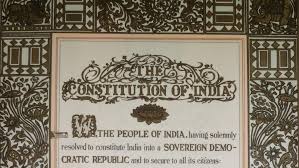
In light of the recent controversy over the issue of One Rank One Pension (OROP), it may be pertinent to turn for guidance to the supreme law of the land, the Constitution of India. This document, drafted over thousands of hours of deliberation and discussion, provides the blueprint according to which the government of India is supposed to run the country. As such, the constitution lays down certain principles as inalienable and intrinsic to the very nature of India as envisioned by its writers, as well as by the millions of Indians they represented.
One of the most important philosophical foundations of our state and it’s polity is the idea of equality. In a country recently ravaged by colonialism, marked by racial discrimination and second class treatment of ‘natives’, we determined that the very foundation of our nation would rest on the idea of innate human worth, regardless of origin, sex, belief or any other such factor. This is manifested both in the preamble to the constitution, which guarantees ‘equality of status and opportunity’ and in Article 14, which goes on to cement equality as a fundamental right, guaranteed to be enforced and protected by the judiciary.
Article 14 essentially includes two promises: the first, equality before law and the second, equal protection of the law. The first promise implies that all individuals, regardless of any factors, are considered equal, with no particular privilege or disadvantage being attached because of caste, colour or creed. The second promise means that all individuals have the rights and privileges that the law guarantees to them, and no discrimination can be tolerated in the enforcement of the same.
As such, the basic premise of Article 14 is treating people placed in similar circumstances equally. Two individuals, as long as they are similarly placed, must receive equal treatment. Obviously, this idea of similar circumstances or status is important; no rational person would argue that the constitution directs, for instance, that everyone, regardless of profession or qualifications, be paid the same salary. Thus, our courts, in their task of interpreting the law, have come up with the idea of ‘intelligible differentia’. If an intelligible differentia can be shown between two people or groups, the law is justified in treating them differently. However, unless this can be proven, differential treatment within the same class of persons is arbitrary and unconstitutional on part of the government. Moreover, the intelligible differentia must be looked at in the particular context of the law in question and its objectives.
The OROP movement, if looked at from a constitutional lens, is essentially a struggle for equality, to ensure that the government keeps promises that have been made. Servicemen, while they might have retired at different times, cannot be seen as anything but one class of people. They go through the same hardships, are subject to the same rules and regulations, and undertake the same operations with the same dangers. They belong to the same occupational group. Thus, the discrepancies in pensions on the basis of retirement date is abhorrent to the very idea of equality as enshrined in the constitution.
Moreover, it must be noted that a pension is not charity. The government, were it to implement One Rank One Pension today, would not be doing the soldiers of this nation any favours. Rather, it would simply be paying its dues. A pension is part of an individual’s remuneration, and the rational objective of a government pension is to ensure that an individual who has given the majority of his or her life to the service of the nation should be allowed to live a comfortable life when he or she is old, infirm, and incapable of earning as well as before. It forms a part of one’s salary, and is something that the worker, or in this case, the soldier, is entitled to. As a pension is supposed to ease the individual’s life post-service, the rational conclusion is that two individuals who retired at the same rank at different times, but are alive and well at the same time in 2015, deserve the same pension. In addition to having faced similar ordeals and operations in service, both these individuals are subject to the same prices and demands in today’s inflationary world. It would be bizarre and absurd to suggest that an 80 year old veteran of the 1965 war requires much less to survive than someone who retired at the same rank last year. In actuality, the older man probably needs more money for healthcare in his advanced years.
Thus, the government’s reluctance to implement OROP besmirches the idea of equality as promised to each citizen of our nation. It represents a refusal to pay thousands of its own soldiers what is owed to them, and is tantamount to abandonment and betrayal. While arguments might be made by those who oppose OROP about the burden on the exchequer, it is vital to realise that this burden is nothing but the saved up pay of the men on our borders, promised to them once their watch is over, now refused by those in the highest offices of the country they fought, and very often, died to protect.

Posted in Military, Politics | Tagged , , , , | Leave a comment

Audacious Fortunes

65Ops

(The following article of mine appears in the August 2015 issue of Defence and Security Alert and is posted with their kind permission)

The correlation between ability to toil and corresponding returns in terms of better fortune was aptly put by Hollywood producer Samuel Goldwyn when he said, “The harder I work, the luckier I get”. In the case of soldiers this concept is better epitomized in the adage “Fortune favours the brave”. Reading the exploits of some of the heroes of the 1965 Indo Pak war, I came to a conclusion that while there is a lot of wisdom in these words, there is room for slight modification. In a battlefield with bullets flying thick and fast, shrapnel from a hundred projectiles seeking their unfortunate prey to kill or maim, difference between finding the bullet with your name on it and giving it a skip is often a matter of chance and probability. But to actually cheat the projectile even after it has been delivered to the correct address can be attributed to nothing but pure luck. Bravery in war is so commonplace that lady luck is probably too hard pressed to serve every instance. But there are some notable instances during that war when she did manage to reach on time.
Major (Later Lt Gen) Ranjit Singh Dyal, became a household name after leading 1 Para attacks on successive enemy held features over three days, ultimately capturing the vital Haji Pir Pass. Beginning on 25 August 1965, this was the first large scale foray by Indian forces across the Cease Fire Line (CFL) at a time when war had not been formally declared. Pakistani infiltrators had been coming across in large numbers, supported an augmented by their regular troops, in a repeat of the tribal invasion of 1947. The capture of Haji Pir Bugle including the pass of the same name was meant to strike at the infiltration bases and send a strong message to deter Pakistan.
Maj Dyal led the action from the front all along the way. He lost many men during those fateful days, but remained unscathed himself despite tantalizingly tempting fate several times. It was after the most critical battle was over and Haji Pir Pass captured that the bullet with his name finally traced him. The Paras were in the process of consolidating their hold over the pass by occupying heights around it when Maj Dyal was hit by a burst from an enemy automatic weapon. It hit the housing of his sten gun and pierced through his Smock Denison (the iconic loose coverall jacket worn by paratroopers) without wounding him. He was subsequently awarded the Maha Veer Chakra, lived to serve his country for another 49 years, retired as an Army Commander and subsequently served as a Lt Governor of Puducherry and the Andamans.
As a reaction to the loss of Haji Pir, Pakistan upped the ante, launching a full scale attack into the adjoining Chhamb sector. On 1st September 1965, two Pakistani armoured regiments crossed the CFL and the International Boundary (the junction of the two lies in this sector) with almost a division worth of Infantry following in their wake. Pakistani plan was simple but daring – to head for Akhnoor and capture the solitary bridge on Chenab River there. They could then reinforce this success by capturing Jammu and cutting off Indian access to Kashmir completely. Preponderance of armour in composition of this force meant that the Indian infantry brigade deployed ahead of Chenab could be bypassed or overwhelmed with impunity. The only Indian elements that could pose any deterrence to Pakistani tanks were one squadron of light tanks and the few anti-tank weapons of the infantry battalions. Besides, of course, the indomitable spirit and courage of Indian troops manning these.
Major Bhaskar Roy was commanding the squadron of 20th Lancers located in the sector, equipped with French AMX-13 tanks. The 14 ton light tanks, favoured for that sector since they were the only ones which could be taken across the Akhnoor bridge, were no match for the 40 ton Pattons which had a bigger gun, longer range and much thicker armour. Yet, undeterred by the overwhelming odds, Maj Roy and his squadron fought a valorous battle to halt the tide of enemy armour for as long as they could. Maj Roy, mounted on his tank, was in the thick of the very first engagement with enemy Pattons near the border village of Burejal. The shorter ranged AMXs had waited, hidden in turret down positions, allowing the larger Pattons to come nearer. As they came within range, Maj Roy ordered his tank gunner to open fire on a selected tank target, and the other tanks followed suit.
An intense tank vs tank battle ensued, with both sides taking several direct hits. The doughty crew in lighter tanks gave as good as they got, notching up several Patton kills and denting the cocky self-confidence of their adversaries. During this battle Maj Roy’s tank took a hit, and a piece of shrapnel came whizzing and struck him on his chest. The impact was hard, and would have been fatal, but for the silver cigarette case in his chest pocket. It was a present from his father, and Maj Roy generally carried it on his person – that day it saved his life. Possibly one of the few occasions when the habit of smoking was responsible for doing so to someone. His gunner wasn’t as lucky, and succumbed to another splinter. The battle continued for better part of the rest of the day, with the AMXs falling back to successive positions to contest enemy, delaying their advance.
Though the enemy tanks did ultimately succeed in advancing substantially, but the actions of this solitary squadron led by the audacious and lucky squadron commander ensured that they didn’t have the free run up to Akhnoor that they were hoping for. The delay gave time for Indian forces to build up across the river and reinforce their positions, preventing the execution of Pakistani plan. Maj Roy fought out the rest of the war without any major incident, and was awarded the Maha Veer Chakra for his role in stopping the Pakistani advance. He died three years later in an unfortunate road accident.
The Indian government considered the violation of International Boundary in Chhamb sector by Pakistan an act of war, and gave army the go ahead to take necessary actions accordingly. The army’s plans in such a contingency was to launch offensives into Pakistani Punjab, threatening Lahore and Sialkot, forcing them to withdraw their armour and artillery from Chhamb to protect these vital towns. This was put into action on 6th September, and as part of this offensive 3 Jat under Lt Col (later Brig) Desmond E Hayde was tasked to capture a Pakistani village called Dograi. The village lay on the Grand Trunk Road between Amritsar and Lahore. Over the next 17 days, 3 Jat fought some of the fiercest battles of the war, capturing Dograi not once but twice. The first time was on 6th September itself, when the Indian offensive caught the Pakistanis ill prepared, and the Jats brushed aside minor opposition, rushing headlong and capturing their objective within 8 hours of crossing the International Boundary. Due to a series of unfortunate miscommunications or lack of adequate communications, they were ordered to fall back closer to the International Boundary, frittering away the territorial gains.
The Jats next tryst with Dograi was on 21st September, when they attacked and captured it yet again. This time around it was a much tougher nut to crack, since it had been reinforced by an adequately warned and well protected enemy. But Col Hayde led his battalion to the capture of Dograi for the second time, just before the war came to an end with the ceasefire being declared on 23rd September.
During both the battles for Dograi, and in the actions during the intervening period, Col Hayde continued to have the uncanny knack of being wherever the fighting was thickest. His utter disregard for personal safety led the Jat troops to label him as a ‘Bawla’ (Mad) CO. Fate did take up the temptations he offered on several occasions, and he had a couple of narrow brushes with death. The first two were on 6th September, the very first day of operations, when he suddenly came face to face with the enemy and his own carbine failed to fire. But Lance Naik Kunwar Lal, Col Hayde’s orderly, disposed the enemy soldier off with a well-aimed shot before he could fire at the CO. A little later Col Hayde narrowly missed being shot down by enemy aircraft which strafed their position, though his second in command, Maj Marwah, wasn’t as lucky.
The next incident took place on 8th September, after the battalion had fallen back from Dograi and taken up position on the Upper Bari Doab Canal halfway between the border and Dograi. They had dug shallow trenches, and the CO was sitting on the edge of one such trench when their position came under attack by enemy tanks. One tank shell landed very close to where he was sitting, killing Lt KP Singh, the Intelligence Officer, instantly. A shrapnel struck Col Hayde in the small of the back too, and would have been fatal but for the fact that it hit his water bottle, causing a minor injury in his back instead of cutting through his spine. His lucky run didn’t end there. The impact knocked him into the trench, and moments later another shell landed precisely where he had been sitting. Two such narrow escapes within a span of a couple of minutes do show that Col Hayde’s luck must have been working overtime. He survived, to lead the battalion to glorious victory at Dograi, and was also awarded the Maha Veer Chakra, retiring as a Brigadier years later.
Three brave men across three theatres of operation, bound together by their audacity and good fortune. Each of them survived to personally play a significant role in ensuring ultimate victory for the country, providing decisive leadership at critical junctures. It was as if fortune was actually watching over them, indulgently placing a protective hand to keep them from harm’s way, knowing their sheer audacity would prevent them from looking out for themselves. So, while there were many many brave men in that war, not all of them were similarly favoured by fortune. I therefore like to believe that fortune may not always favour the brave, but it does do it’s bit for the audacious.

Posted in Military | Tagged , , , , | 1 Comment

What if Nehru was still the PM in 65?

1965-war

Barely three years after facing a humbling if not humiliating defeat at the hands of Chinese PLA, the Indian army was to be put to test again in 1965, this time with confrontation brewing on the western borders. But there was one major difference. This time, instead of a supposed statesman of immense stature, we had an unassuming Prime Minister with political stature to match his diminutive size. Lal Bahadur Shastri, who had taken over after Nehru’s death in 1964, was a political lightweight and a compromise candidate for premiership. Yet, as the outcome of this war clearly demonstrated, its the decisions taken by a leader, and not his stature or personalty which matter in times of such crises. In April 1965, when Pakistan launched its provocative though low level attacks in the Rann of Kutch, India did not rise to the bait immediately. Preferring localized punitive actions over escalating to a full blown war in a fit of machismo, as the recourse to ‘forward posture’ opposite China in the prelude to the previous war had been .
The difference was that this time the Prime Minister based his decisions purely on military advice. As a result the army got adequate time to prepare for a befitting reply to the next provocation, which came within four months in the form of Op Gibraltar. In August 1965, Pakistan launched a massive infiltration operation into Jammu and Kashmir with sinister designs. They hoped to coax the Kashmiri people to rise in rebellion and quickly declare independence. After the initial tide of infiltration had been checked, Shastri heeded to military advice yet again, and gave clearance to launch limited offensive operations across the Cease Fire Line (CFL, as the Line of Control was then referred to) to capture vital buses facilitating infiltration, including the Haji Pir Pass.
The success of these operations forced Pakistan to up the ante by launching Op Grandslam. This was a blitzkrieg armour and infantry thrust into the Chhamb sector, aimed at capturing the vital bridge at Akhnoor. Crossing the CFL on in multiple thrusts 1st September, after heavy artillery shelling, the Pakistani forces managed to temporarily overwhelm the Indian forward defences. Shastri took another bold yet well considered decision to allow the employment of Indian Air Force against the advancing Pakistani forces. In contrast, the air warriors had been left fuming, sitting out the 1962 war since the government never gave the go ahead for their employment.
While the combined action of the army and air force stabilized the situation, Shastri asked the army to immediately launch the preplanned Indian offensive across the International border in Punjab. Army Chief Gen Chaudhuri told Shastri that he needed a couple of days to prepare as the international boundary immediately as till then, troops had not been moved forward from their distant cantonments. Shastri told him, “Ab to sab Army ke hath de diya” (I have put everything in the Army’s hands.) Shastri later said that Chaudhuri and others were taken aback when he gave the orders to cross the international boundary and asked them to march into Pakistan. Possibly they never expected such a quick and firm response.
Indian Army launched two near simultaneous thrusts, towards Lahore and Sialkot. This forced the Pakistanis to pull back their armour & artillery from Chhamb, putting paid to their hopes of capturing Akhnoor. International intervention brokered a ceasefire before a decisive victory, and the result was a stalemate, with India having a definite edge in terms of captured territory and prisoners.

FullSizeRender

If 1971 was Indian Army’s finest hour, 1965 was when it came into their own. Throughout the operations the political leadership was decisive without interference. The business of war was left to the generals, unlike 1962 when Nehru and the defence minister Krishna Menon constantly micromanaging, even going to the extent of appointing and sacking commanders. The chain command was never bypassed like in the case of Nehru dealing directly with the Corps commander Gen Kaul over the head of the army chief.
One wonders if, had he been alive and at the helm, would Nehru have been able to act in a similar manner, with similar results? The answer, thankfully, remains in the realm of speculation.

Images credit – https://anshulg.files.wordpress.com/2007/05/1965-war.jpg, The Tribune

Posted in Military, Politics | Tagged , , , , , , , , | 1 Comment

Mere paas Maa hai

unknown


Since Rahul Gandhi is approximately the same age as me, it would be safe to guess that he watched the same movies that I did in early childhood. The staple Bollywood fare of the 70s, which had a recurring central theme – rich versus the poor. There would be variations of course. It could be the poor mill workers pitted against the unscrupulous tyrant of a mill owner, who often had a side business of smuggling. Or the poor peasant fighting against the exploitative thakur and his leery henchman of a munim. If there was a love interest, the two would be on the opposite sides of the economic spectrum, and the girl would often be the daughter of the aforementioned mill owner or thakur. She would, however, be more enlightened than her father, and would choose love over wealth. Blank cheques, or similar inducements would be offered to the hero, which, if accepted, could take care of his mother’s treatment or sister’s marriage. But that would also be spurned. Then force was resorted to, but love and virtuous poverty triumphed over avarice and wealth in a happy ending.

The message was loud and clear – poverty is good and clean, while being rich automatically makes you the villain. Their interests always clash, and one can only be happy at the cost of the other. The rich always exploit the poor, but the poor always triumph in the end. And this is the message that Rahul Gandhi seems to have been weaned on. At least that’s what his speeches and posturing throughout the election campaign of 2014, and now in his new resurgent and slightly more vocal avatar. It’s them versus us, as in the rich and their government versus the poor and their patrons, the Congress party. It is the central theme in all his speeches inside and outside the parliament, just like those movies.

So he would like to have all of us, and more specifically the ‘poor’, to believe that every decision, every step, taken by this government in the last one year, is with the sole purpose of benefitting a handful of rich businessmen. And of course, just like those movies, anything that benefits the rich must obviously be at the cost of exploitation of the poor. Whether it is the Land Acquisition Bill, Make in India project, the foreign investment that is flowing in, the infrastructure development that is taking place – the poor farmers, factory workers and labourers are the ones who will pay the price for enriching the coffers of the wealthy blood sucking businessmen. And there is only one person from one party who stands between this abject exploitation and a happy ending – no points for guessing who. Of course, it is immaterial that the self-styled patrons of the poor could do very little for them while being in a position to do so for more than sixty years, including an unbroken stint for the past ten when Rahul Gandhi himself was calling the shots. This caused one commentator to wryly state, its not the poor but poverty itself which Rahul seems to love.

This Bollywood hero of the 70s story in which Rahul wants to cast himself is based on several flaws of logic and inaccuracies of facts. But just like those movies, logic and facts could never be allowed to get in the way of the story. So if shutting down of a food park in the hero’s turf by an avenging government is the story, the fact that the closure was initiated by their own pro poor government is an inconvenient detail that deserves to be ignored in interest of storytelling.

Unfortunately the poor little rich boy doesn’t seem to look around him and see that the prevailing story around him has changed a lot since the 70s. So the heroes of 21st century set up businesses like Rocket Singh or Mickey Virus to meet their rising aspirations rather than wallowing in poverty. Rather than fighting the rich, they are competing to join their league. The aspirations of this crop of impatient young men and women cannot be met merely by giving them platitudes and doles through unimaginatively conceived and inefficiently implemented employment schemes, the only purpose which serve is to channelize money into pockets of the corrupt. They can only be met in a growth oriented environment which this government is trying hard to nurture.

What Rahul Gandhi does not understand (or conveniently pretends not to) is that social / economic empowerment and growth are not mutually exclusive, nor is one necessarily at the cost of the other. They can, and do, go hand in hand. A competent government with the right intentions can actually deliver both. So, while a 70 year old farmer in Modi’s adopted village in his constituency gives him 15 marks out of 10 on development, ASSOCHAM gives him a 7/10 too. So, just like a movie made today based on the 70s formula is not likely to set the box office on fire, Rahul will also have to update his narrative if he wants to become relevant again. Despite the fact that uske paas maa hai.

Posted in Blogitorial, Politics | Tagged , , , , , | Leave a comment

Mirza Ghalib and the veterans

3

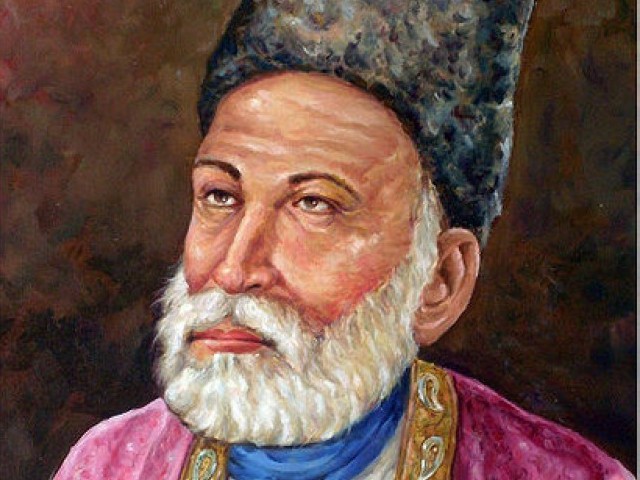
Mirza Asad-Ullah Khan Ghalib died a poor, miserable man. Like most geniuses, his work got its true approbation long after he wasn’t around to bask in the glory. But the lack of recognition was only part of the reason for his misery. He had much too high an opinion of himself to hanker for praise from lesser mortals, though admittedly it never hurt to be extoled at mushairas. The major cause of his melancholy was the indignity he had to face as a petitioner before the British government.

Ghalib’s uncle, who was also his guardian after his father’s death, was the governor of Agra under the Marathas. When the territory was annexed by the British, they appointed him an officer of 400 cavalrymen and apart from a fixed salary, gave him a grant of land near Mathura. When he died, the land was taken away and a pension fixed for his next of kin in its place. Ghalib had a small share in this being one of the heirs. The British delegated the responsibility for paying the pension to the Nawab of Firozepur Jhirka, to whom the land had been transferred. The Nawab arbitrarily reduced the pension, including Ghalib’s share, to less than one third. Now, being a poet (just like being an author and blogger) is not something one can make a living out of. So the pension mattered greatly, and not getting what was his rightful due rankled. Thus Ghalib spent a large part of his life fighting for his pension to be restored to the rightful amount.

He even undertook a long journey from Delhi to Calcutta, which was the capital then, to put his case directly before the British government, leaving Delhi in 1827 and returning in 1830. He expressed the affront at the shoddy manner in which he was treated in his inimitable manner as follows:-

Har ek baat pe kahte ho tum ki tu kya hai

tumhin kaho ke ye andaaz-e-guftagu kya hai

(On every conversation/utterance of mine, you say “what are you?” Pray let me know what form of conversing is this?)

He may not have been a man of means, and was here as a petitioner, but as an intellectual and as a member of the nobility, he expected some basic courtesies which were not extended to him. He never did get his dues, mainly because even though the British were favourably inclined, the order had to be implemented by the reticent Nawab of Firozepur Jhirka.

Almost 200 years later, with the British long gone, the Indian armed forces veterans are getting a taste of the bitter medicine administered to Ghalib. They have been fighting a frustrating battle for their rightful dues just as Ghalib did. The differences – they are up against a democratically elected government and bureaucrats of their own independent nation, not a colonial power and a whimsical Nawab. And the dues are for the blood and sweat shed by them personally, and not by a distant ancestor. These factors make the situation even more galling than it must have been for the ‘Sukhanwar’. And though they may not have Ghalib’s gift of rhetoric to express their anguish, the veterans chose other means like returning their medals and publicly burning their artificial limbs.

Delhi

Last year, in the run up to the elections, both major alliances tripped over each other to promise the implementation of this long standing demand. The National Democratic Alliance rode to power on popular aspirations, one of which was the veteran’s hope of OROP finally being implemented. One year down the line, the veterans are still waiting. Waiting, after the Prime Minister and the Defence Minister have both categorically expressed their commitment towards giving them their dues. As per reports, the case is shuttling between the babus of Ministries of Defence and Finance, while the veterans wait. Hoping that the decision makers of today are more successful in ensuring the modern day Nawabs follow their writ.


Posted in Blogitorial, Military | Tagged , , , , | Leave a comment