Silence of the Lambs

A soldier of India's Assam Rifles stands guard...
Image via Wikipedia

It is unfortunate that of late the armed forces have begun to be perceived as fair game by a section of the media, which seems to take vicarious pleasure in taking pot shots at them without even bothering to do their due diligence. Perhaps the shenanigans of some senior officers in the recent past is responsible for this attitude, whereby they feel that they can trash the services including their chiefs with impunity, with little or no organizational repartee. The editorial ‘Soldierly Silence’ in Indian Express is the latest example.

The content of the editorial range from flippant (“Where’s India’s Navy Chief? …. Surely Admiral Verma is letting his service down by keeping them out of it) to ridiculous (“…. insensitive statement to make of another force, still bereaved and grieving”). Gist of the opinions expressed is that service chiefs are making points to the political class in full public glare through the media. It has gone on to draw parallels with the Sixth Pay Commission issue. The piece seems to gloss over facts, relies heavily on appearances and assumptions, and, to my mind, is wrong in its basic premise expressed in the title – that the soldiers must remain silent sentinels, to be seen only in grave emergencies, and not to be heard at all.

Firstly the Army Chief’s statement in question. As reported in Indian Express itself, the Chief spoke of the “internal deficiencies in training and other things” which were being analysed. He also spoke of the performance of the Army being better in the context of the training being carried out with the units and subunits as an entity being the reason behind it. Compare this with the statement of the Home Minister, quoted in the same article – “Our role from day one is to only assist the state governments …. we will provide paramilitary forces to the state governments to regain territory lost to the Maoists so that the state governments can restore the democratic process…”. It’s interesting that the newspaper feels the Army Chief is trying to “evade blame”, while the Home Minister’s remarks do not evoke similar reaction.

About the veracity of the Chief’s statement – another newspaper, which took the trouble of sending reporters to the site rather than relying on sound bites in the corridors of South Block and preachy pieces from air conditioned offices, filed this report from ‘Ground Zero’. As per this report, “CRPF jawans at the camp report that they had not been imparted any jungle warfare training …. were new to the area and had received only normal CRPF training..” So it is not understood whether Express wanted the Chief to lie about the standards of training in keeping with the ‘sensitivities of the bereaved force’, or to evade the questions altogether. Remember, the remarks of the chief were in response to a direct question asked, and not a statement issued in a press conference.

The projection of CRPF as a force “still bereaved and grieving” is hopefully a ridiculous figment of the newspaper’s imagination. A professional force cannot be likened to a mourning widow, too caught up in grief to be able to take immediate corrective actions through dispassionate analysis of the shortcomings leading to the martyring of its men. By that analogy, an army should be numbed by grief into complete inaction after the losses in the first few days of any war. Such a suggestion therefore is a far greater insensitivity and an insult to the professional credentials of a force than the remarks about shortfalls in training, which could be due to exigencies of service.

A reputed newspaper must be more sagacious about expressing its opinions. Why must it assume that in a matter of such great national importance, the Army and other forces need to indulge in one-upmanship? Why does it display lack of confidence in the Army Chief to act out of anything but best national interest? Or question the authority of one in whom the nation reposes its trust to guard it against external and internal threats, to talk about issues concerning such threats. Irrespective of the extent of the involvement of Army in countering Naxalism at this particular stage, it cannot but continue to remain an active participant in the decision making process as the ultimate tool of the state on which the onus to react would fall if all else fails.

The editorial, in the end, also brings up the issue of the Sixth Pay Commission, drawing parallels. Indian Express, it may be remembered, was vociferously critical when a stand was taken by the three service chiefs about implementing the recommendations after the anomalies were addressed. A widely circulated editorial castigated the chiefs for “defying the cabinet’s authority”, a creative obfuscation blurring the lines between the prerogatives of the cabinet with the diktats of the bureaucrats. The Chief’s stance was in keeping with the age old Chetwodeian Credo of placing one’s command before any considerations of personal interests, and was ultimately vindicated.  In what was probably a completely unrelated turn of events, the editor was shortly thereafter awarded the Padma Bhushan. The relevance of linking that episode with the current context is not understood, unless the newspaper wishes the armed forces to maintain ‘silence of the lambs’ whether it is on matters of national interest or of injustice to the ranks.

Reblog this post [with Zemanta]
Posted in Blogitorial, Media, Military | 4 Comments

Mandalisation of the Army

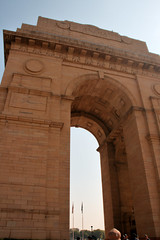
India Gate
Image by Christian Haugen via Flickr

Ajai Shukla’s article ‘Soldier Heal Thyself’ in Business Standard talks about ‘Mandalisation’ of the Army as one of the many ills that ail its appraisal and promotion systems. The previous Blogitorial on this Blog had also spoken of the urgent requirement of overhauling these. I would like to dwell a little further on the ‘pro rata’ policy responsible for this ‘Mandalisation’ – the background, possible reasons, and its impact.

Prior to the introduction of this policy, the Combat Arms i.e. Armoured Corps, Infantry and Mechanised Infantry comprised the ‘General Cadre’, with no distinction amongst them for promotional vacancies. Selected officers from Combat Support Arms like Artillery, Engineers and Signals, based on merit, were also given the option to join the general cadre, giving them the opportunity to rise to the highest ranks. Each service had its own fixed vacancies for higher ranks for appointments that could be held only by officers of the particular service, such as the head of service in each formation HQ. Each combat support arm also had such vacancies – such as Chief Engineer or MG Arty.  The only specified vacancies within general cadre were at the Line Directorates of each arm and their Schools of Instruction. Even within this, the Mechanised Infantry had the smallest share as it was clubbed with the Armoured Corps in the Line Directorate, and had a smaller centre commanded by a Brigadier.

Somewhere along the line, resentment grew amongst the ranks of Infantry about the disproportionate number of Armoured Corps officers getting the share of the general cadre vacancies. This feeling came to a head in the early nineties, when the COAS and five Army Commanders at one time were from the Armoured Corps, and the sixth Army Commander and Vice Chief from Artillery. Thus, the biggest fighting arm in terms of strength, which was also bearing the brunt of the Counter Insurgency operations in North East and J&K, had no representation at the upper echelons of command. Remember, this was just before the Rashtriya Rifles was raised, and therefore the deployment of officers from other arms in such operations was therefore limited to a handful, and those also on staff duties in formation HQs.

While the chagrin of Infantry officers was justified, the causes attributed to this state of affairs was not entirely fair or true. The perception was that all officers in the Armoured Corps received inflated ACRs as a matter of routine, and that there was a high degree of parochialism within the Corps, leading to better promotional prospects. Instances of inflated ACRs and parochialism, while not completely absent in the Armoured Corps as in any other, were really not the real reason behind Armoured Corps officers ‘doing well’. The real reasons lay in the quality of initial intake at some points in time, better professional exposure due to nature of the arm’s operational roles, and environment in the Armoured Regiments being by and large more conducive to professional development. Each of these needs some explanation.

Till a few years back (before the impact of ‘pro rata’ took its toll), Armoured Corps was the most sought after arm amongst the Gentlemen Cadets passing out of IMA / OTA. In almost all courses that passed out, more than half the GCs from the ‘Super Block’ i.e. in the first ten or so in the overall order of merit of the course, opted for it. In fact the perception was that the only way one could get commissioned into Armoured Corps was either by being in the super block, having ‘Parental Claim’ (GCs whose fathers had served in a particular arm / regiment had a lien on getting commissioned into it), or having some very strong strings to pull. Infantry, on the other hand, was not very popular as a choice, and people opting for other arms landing up in Infantry used to call themselves ‘casualties’. The reasons for this can be debated at length and probably acrimoniously, but that is not the point at issue. The point is that a disproportionately large number of young officers getting commissioned into Armoured Corps were from the higher end of the merit in their course. Although performance in the Academies and passing out merit cannot be taken as an unfailing yardstick for subsequent performance, law of averages would dictate that a large number of these high achievers would continue to excel throughout their service and therefore have an edge when the batch was considered for promotion. Thus the impact of ‘quality of initial intake’.

Better professional exposure relates to the role of armour in operations. Normally, a squadron of armour supports the operations of an infantry brigade, and a regiment that of a division. The ‘area of influence’ and ‘area of interest’ of an armour commander is therefore vast as compared to his counterpart in Infantry. Even during peacetime training events and exercises, a squadron commander is therefore an inherent part of the planning process at the Brigade HQs, and his CO is an advisor to the GOC. Such exposures give them a degree of self assurance, insight and opportunities for learning that are not available to their counterparts in the Infantry. For instance, when the squadron commander attends his CO’s orders, he gets a fair insight into the way the GOC intends to fight the divisional battle.

Environment in majority of the Armoured Regiments is conducive to further enhancing such professional growth and development. Young officers are encouraged to speak their minds and also be unhesitant about asking questions on professional matters, not only within the unit, but also during formation training events. Rarely is their professional initiative or curiosity curbed. The outcome of these opportunities becomes apparent at courses of instruction where such an exposure gives them an edge over their counterparts. Unfortunately, this is often ill conceived as flamboyance or arrogance, leading to greater resentment against them.

So, while inflated ACRs and sheltered service under parochial senior officers of the same arm can be the cause of the rise of some officers (as in any other arm or service), it would be a gross oversimplification to ignore the abovementioned factors as amongst the causes for disproportionate number of Armoured Corps officers qualifying for promotions when general cadre vacancies formed a common pool.

Coming back to the origins of the ‘pro rata’ policy. Gen VP Malik was the first Infantry chief to take over after the highly resented period described above, and it was during this tenure that the policy of reserving promotional vacancies in the general cadre based on the strength of an arm was formulated. Thus began the process of ‘Mandalisation’ of the army, where promotions to higher ranks are now on the basis of quota for arms rather than on the comparative merit within a batch. Thus, if there are 12 vacancies for Armoured Corps and 100 vacancies for Infantry in a batch of 500 Lt Cols being considered for promotion, an Armoured Corps officer who may be 13th in Armoured Corps and 20th in the overall merit amongst those 500 will not be promoted, while an Infantry officer who is 130th may be.

Another reason cited for this preferential treatment is the Infantry’s need to be compensated for greater hardships such as deployment in Counter Insurgency. Not only is this logic warped, in today’s scenario when officers of all arms get exposure to such environments through RR and other tenures, it is no longer valid. Rewards for service adverse conditions also come through higher allowances, gallantry awards, and additional weightage for field / operational service in promotion boards and selection for foreign assignments. In the example cited earlier, it is feasible that the Armoured Corps officer 13th in merit may have had two field tenures and the Infantry officer at 130 may not have had any at all – there is no mechanism to avoid such lacunae. Reserving promotional vacancies for an arm on this basis is therefore not warranted, particularly when merit is the casualty.

The impact of this policy has been visible on the morale of officers of Armoured Corps and Mechanised Infantry. A clear indicator of this is the Staff College results in the past few years, which has seen a declining number of officers from these corps qualifying. The reason is the general belief in the futility of aspiring for the professional course in the ‘pro rata’ regime. It must be emphasised that no matter what the size or role of any arm or service, each has a vital role in the ultimate operational effectiveness of the Army, and appeasing one at the extreme cost of another is far from prudent.

It is unfortunate that decisions at the apex levels in the Army have been made based on loyalties other than to the organisation as an entity. Officers beyond the rank of Brigadier are supposed to be above the constraints of arms or regiments, and that is the reason traditionally they no longer wear the shoulder insignia of their regiment / corps. They are also supposed suffix ‘IA’ (Indian Army) to their names, as opposed to the regiment / corps suffixed by officers below that rank. This practice seems to have been lost, not only in letter, but also in spirit. Things had reached such a head recently that even the press commented on the proclivity of senior officers to bat for their own arms.

One hopes that when the new chief sets about improving the internal health of the Army, he would be able to rise above narrower affiliations and be able to act in the overall interests of the organisation.

Reblog this post [with Zemanta]
Posted in Appraisal System, Blogitorial, Military, Ponderings, Promotion System, Reforms | Tagged , , , , , , , | 35 Comments

Challenges Before the New Army Chief

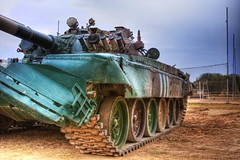
T72 Tank of The Indian Army
Image by jeffjose via Flickr

Modernisation is main challenge for new army chief says this article. And there is no doubt that a great deal of his energies will be spent in this high priority area. The delays in procurement of equipment have received adequate press in the last few years. Interestingly, the outgoing chief had also spelt this out as his primary goal on taking over in Oct 2007, as had his predecessor in Jan 2005. The fact that this continues to be a major challenge points to the plethora of ponderables and imponderables that make the modernisation process so complex.

But modernisation of the force in terms of induction of state of the art equipment is only one facet of preparing to face the challenges of the future battlefield. Another important aspect is adapting to the changes that the current environment necessitates, and taking corrective actions where required.  These relate to the very fabric of the force, which has withstood the tests of time to emerge victorious every time. The rising challenge is in preserving that fabric while adapting to the changes.

The core of this fabric is the regimental system, which grooms young officers into leaders of men by instilling in them values and ethos that transform them from ordinary young men into extraordinary leaders of men.  Of course, there are no formal classes that achieve this transformation. It is achieved through spending formative years in the unit going through the grind with the men, with continuance guidance by senior officers through words and by setting personal examples.

Today this regimental system is under threat due to a number of factors. Changing socio economic values is one, but that is a part of the overall environment about which nothing much can be done. Two additional factors, about which action can be taken, are shortage of officers and the performance appraisal system in vogue.

Impact of shortage of officers is axiomatic – with fewer officers in the unit, each officer is taking on more and more, severely impacting the process of grooming. The young officer who is to be groomed, and the senior officers who are to groom him, are so caught up in just getting through the day that the urgent overshadows the important.  One would expect the system to take corrective measures by cutting out a great deal of minutiae and allowing the reduced strength of officers to focus on the high importance but low urgency tasks of regimental soldiering. A lot of well intentioned expressions of doing this are regularly articulated but unfortunately what is manifesting on ground is the opposite.

Interestingly, major contributing factors for of this are the other two mentioned earlier – the changing mores and performance appraisal system in vogue.  Changing mores because career progression is valued over other considerations – and, as mentioned, nothing substantial can be done about individual aspirations caused by changing mores. The appraisal system therefore, lies at the core of the ‘area of influence’ – a contributing factor about which it may be possible to do something about, but first it must be understood and acknowledged that a problem exists.

The problem is that at every level, obtaining a ‘good chit’ is becoming exceedingly important. In fact, actually merely a ‘good chit’ is not adequate to ensure the next career course and as a logical adjunct, the next rank. So the aspiration is outshining peers and obtaining the prized string of nines. The path to this is seen to be through the never ending stream of minutiae, and the window very short due to limited tenures of people at either side of the ACR. Of course, the equally damaging adjunct is the extreme aversion to risk of any kind in any activity, which might lead to an abrupt end to a promising career. This has a spin off effect of making caution rather than audacity a way of life – not something one wants to instil amongst soldiers and their leaders.

A young officer who joins the unit all charged up and full of ideals drilled into him at the academies soon faces these realities. It doesn’t take him very long to gauge the situation and understand where the focus lies, and adapt himself accordingly. Grooming and regimentation are prime casualties, and disillusionment brings with it a degree of disdain for seniors and cynicism about the values professed. A strong organisation like ours can carry on for a while on the strength of resilience – and that is what is happening so far. But it needs to be taken off resilience and put back on values before things start to unravel.

The two areas of focus for preserving the fabric therefore are:-

  • Adapting to the inevitability of shortage of officers, preventing it from affecting the fabric by allowing the reduced strength to focus on core regimental activities through ruthless and proactive pruning of minutiae.
  • Transforming the performance appraisal system and the selection system for promotions, to engender an environmental change.

Understandably, it is easier to comment on these issues than actually do something substantial about them. And it is not that these are not on the radar of the decision makers. The point is that the damaging potential of these are probably not yet apparent due to the cloud brought about by insulation through command chain and the reluctance to talk about negative issues for fear of being seen as cribbing. But it must be emphasised that this is a negative spiral that grows with every whorl, and must be arrested before it does more damage.

The only way it can be significantly arrested is if the Chief recognises their criticality and makes addressing them amongst his primary challenges, at par with modernisation.

Post Script- Army Chief to focus on internal values, says today’s news. This is a very heartening news, and one hopes that realistic identification of root causes of the threat to values will be a first step.

Reblog this post [with Zemanta]
Posted in Appraisal System, Blogitorial, Military, Ponderings, Reforms, Shortage of officers, Values | Tagged , , , , , , | 2 Comments

Shortage of Officers – a Simple Solution

Tank
Image via Wikipedia

The shortage of officers is  a live problem  the army is facing today. Unfortunately, the realization has not dawned on many people that this is not merely the army’s problem, but the concern of the nation. Army is after all, a national asset, and any degradation in its efficiency is detrimental to national security and national interest. The efforts to overcome this problem therefore needs to be made at a national level.

While articles on the subject continue to appear with regularity in national media and websites, practical solutions are hard to come by. This article on Meri News, for instance, even suggests better looking spouses for army officers, improving their social standing. One wonders the efficacy of such moves, but it is heartening to note that thought is being given to the issue.

One possible solution is to make five years of military service compulsory for all gazetted government officers in the centre and states. The entry age should be reduced, exams held immediately after graduation, and successful candidates should join the army, serve for five years and then move on to their respective service. This would be a win win situation, since there is no dearth of aspirants for the civil and allied services, and all these candidates could contribute to the security of the nation prior to moving on to their selected career. Reducing of induction age would ensure that they enter their respective parent service at the same age that they are doing now.

Apart from sorting out the officer shortage in the Army, such a move would also have spin off benefits such as instilling the undoubtedly commendable discipline and ethos of the services in the entire administration, the posting in far flung places during military career giving exposure to grassroots situation to the civil servants, and creating a reserve pool of trained personnel available in case of any exigency. Also, it would promote better understanding of defence affairs amongst the administrators, something that is sadly lacking today.

The time has come to stop paying lip service to the live problem of shortage of officers in the army, and take concrete steps such as the one suggested.

Reblog this post [with Zemanta]
Posted in Military, Reforms, Shortage of officers | Tagged , , , | 9 Comments

China : Some Plainspeak

edit2

The article forming the basis of this story has caused immense amount of debate here, and I guess also in China. It is a realistic scenario, but personally I have reservations about it. The biggest difference between 1962 and today is that both of us have nuclear weapons. While China has the bandwidth to still go ahead and risk a limited nuclear response by India, the provocation will have to be very high. Arunachal has not really been very high on its list of priorities, as it is more interested in the Aksai Chin, from which its land link between Tibet and Xinjinag (spelling?) passes – and it is in control of that territory already. In fact in 1962 China had made an offer that it will give up its claim on Arunachal if India drops its claim to the area in Aksai Chin which was already in Chinese possession and through which it had already built the highway.

My perception and views on the issue may sound a little unpatriotic (and, in fact they are far from that), but I think that we made a very big mistake in not accepting this solution at that time. If you read up on the subject, you discover that the boundary that we very sentimentally defend is actually of rather dubious origin. The areas under dispute were largely uninhabited (like even today) and un-surveyed. The British Indian Government sent some expeditionary and survey missions to mark their territory in the late nineteenth and early twentieth century. There was a lot of intrigue and inaccuracy in the delineation, and at that time the main aim of the British was to keep the Russians out of the region. The resultant boundary was changed by the British themselves on numerous occasions over the next 30 years or so. In early 1900s there was a conference at Shimla on the border issue, attended by the representatives of Britain / India, China and Tibet (which was a British protectorate). The British gave out their perception of the boundary at the conference and an agreement (known as the Shimla agreement – NOT to be confused by one with similar name signed between Indira Gandhi and Bhutto after the 1971 war) was signed by all – except China. China’s stance was that the issue of the boundary must be settled by agreement of all the parties, and she found the boundary being professed by the British very arbitrary. This is the boundary that we are still holding on to a hundred years later. As for China, the boundary issue was never settled, because it was unilaterally decided by the British and never agreed to by them. In their view, the issue should be settled between the two sovereign entities, independent India and China based on a mutually agreed settlement without any colonial baggage.

In the run up to 1962, China repeatedly tried to settle the dispute by mutual consultation, but our stance was firm – not an inch of our territory will be ceded. Its another issue that thousands of miles of it remains under occupation of Pakistan and China, with very little scope of us being able to reclaim it – particularly with respect to the latter. At that stage, the opinion of the Indian Intelligence and Foreign ministry was that China is too weak and involved in its internal problems to be able to attack us. We therefore got into a territorial chess with China. The troika of Jawaharlal Nehru, Krishna Menon (the defence minister) and Lt Gen BM Kaul (an ambitious general and an old crony of Nehru, who was the Chief of General Staff and generally more powerful than the Chief of Army Staff Gen Thapar) conceived the ‘forward policy’. The gist of this was that we go on setting frontier posts in the disputed territory to bolster our claims – prior to that the troops on both sides were deployed way behind, and the disputed area was by and large unheld. This action was initiated sometime in 1959, and was viewed as hostile by China. Between 1959 and 1962, there were many attempts by China to argue for a settlement based on mutual give and take. But our attitude remained  – we can have peace as long as you give up your entire claim – on what’s in our possession as well as what’s in yours. We keep what we have, and also what you presently have – you give it up irrespective.

To make matters worse, the press and the opposition turned the issue into an emotive jingoistic contest, leaving very little room for Nehru to manoeuvre. Nehru did not make matters any better by carrying out diplomacy through the press – his statements of bravado, meant for domestic audiences, were taken as extreme threats and provocation by the Chinese, who took them quite literally. So that is what actually led to the 1962 catastrophe. The Chinese came in from a position of strength owing to the advantage of terrain and road communications on their side of the border in Arunachal, literally overran the unprepared, underequipped and outnumbered Indian troops, and were in a position to threaten the plains of Assam. Then, they unilaterally called a ceasefire and withdrew to their pre war positions. Apparently, the idea was to demonstrate their might, and try and make India come to a negotiated settlement.

The whole point is that we seem to have learnt nothing from history. Why should a neighbour which is definitely stronger negotiate with you from a position of weakness and agree to a settlement which puts it into considerable disadvantage? To India, Aksai Chin is a ‘wasteland where not a blade of grass grows’ in Nehru’s words. To China it is a piece of land providing it a vital link between two of its frontline provinces. Why should they, under any negotiated settlement, give it up to honour our claim over it, a claim which is based on a treaty that they never recognised in the first place? But we are in the Catch 22 situation again. The issue remains emotive, and no government in its right mind could ever dare to suggest the blasphemy of opening our borders to negotiation. In fact even as I type these words I almost feel like a traitor in saying all that I am.

To make matters worse, articles such as these are played up by the media resulting in whipping up more hysteria and jingoism. Probably what is actually required is an exercise by the government to shape the public opinion towards some kind of a negotiated settlement of the boundary dispute with China. In doing so it needs to take the opposition and the media along with it, to avoid the mistakes that were made in 1962. We should not let statements and gestures by both sides aimed at domestic audiences serve to heighten the animosity and drive the two states to into a game of daring each other reach a point of no return once again.

Reblog this post [with Zemanta]
Posted in Boundary Dispute, China, Military | Tagged , , , | 8 Comments